Types of garden pests: caterpillars, cutworms, soil larvae, leafminers and leafhoppers
In this instalment of our garden pest series, we look at caterpillars, cutworms, soil-dwelling larvae, leafminers and leafhoppers. Not every insect is a pest. Before treating a plant, identify what is present, check whether the damage is ongoing and decide whether action is needed.
Garden pests: identification and integrated management

6. Butterfly and moth caterpillars
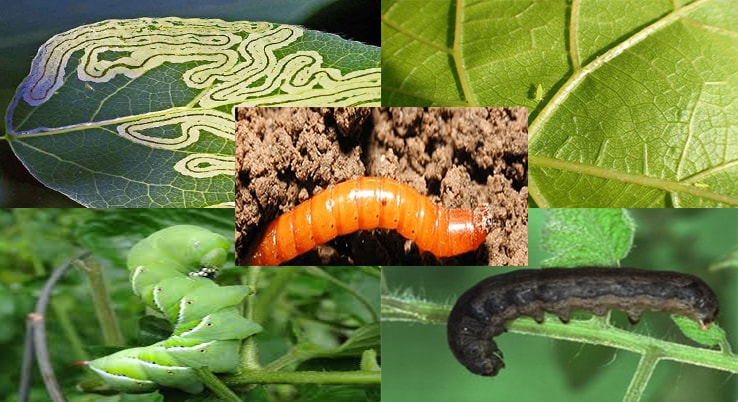
Caterpillars are the larvae of butterflies and moths. Some chew leaves and shoots; others damage flowers or fruit. Their host plants and feeding habits vary widely. Look for irregular holes, droppings and larvae beneath leaves. Some feed at night or in groups, but many do not.
Minor feeding damage often needs no intervention. On small plants, hand-pick damaging caterpillars where appropriate; wear gloves around hairy or irritating species. In a butterfly garden, remember that the caterpillars you remove may become the butterflies you want to attract.
Managing caterpillars
Some formulations of Bacillus thuringiensis (Bt), particularly those labelled for moth and butterfly larvae, can control young caterpillars when they eat treated foliage. Bt is a bacterium used in biological pest control, not a parasite that hunts caterpillars. Confirm the species, plant and product label before use; Bt does not control every insect or every larval stage.
Birds, parasitoid wasps and other natural enemies also help. Avoid homemade dishwashing-liquid sprays: concentrations vary, foliage may be damaged and these mixtures are not a reliable, selective treatment for caterpillars.

7. Cotton leafworm (Spodoptera littoralis)
The species often called rosquilla negra in Spanish is a moth caterpillar known in English as the cotton leafworm, not a “black donut”. Larvae can damage leaves, growing points and tissues near the soil; feeding patterns change with age and host plant. Inspect leaf undersides, plant debris and the base of affected plants around dusk.
Where practical, remove larvae or egg masses, manage nearby host weeds and protect beneficial wildlife. Parasitoid wasps, including some Cotesia species, may contribute to natural control, but no single species should be presented as a universal remedy. If treatment is warranted, choose a product approved locally for this pest and crop. Do not recommend automatic sprays every 10–15 days or confuse synthetic pyrethroids with natural pyrethrins.
8. Soil pests: white grubs, wireworms and cutworms
These common names refer to different insect larvae, not three kinds of true worms. White grubs are beetle larvae, including some scarabs; wireworms are the larvae of click beetles, such as Agriotes; and cutworms are moth caterpillars, including some Agrotis species. Which species occur depends on the region.
White grubs and wireworms can injure roots, bulbs and tubers. If a plant wilts despite appropriate watering, gently inspect its roots and a little surrounding soil before assuming insects are responsible: root rot, drought and poor drainage can cause similar symptoms.


Protecting seedlings from cutworms
Cutworms can sever tender stems at soil level, often at night. Check the soil around damaged seedlings and remove any larvae found. Reduce weeds and excess debris that provide shelter, while avoiding indiscriminate disturbance of beneficial soil organisms.
A simple protective collar around newly planted stems may reduce some attacks. Products intended for beetle grubs, wireworms and cutworm caterpillars are not interchangeable. Identify the pest first and use only a locally approved product when nonchemical measures are insufficient.

9. Leafminers (Liriomyza and other genera)
Leafminers are the larvae of several kinds of insects that feed within leaves. Certain flies in the genus Liriomyza, including L. trifolii and L. bryoniae, create winding tunnels; some moth larvae are leafminers too. The correct spelling of the fly genus is Liriomyza.
Mines may be visible when a leaf is held up to the light, but an old mine may no longer contain a live larva. On mature plants, a few mines are usually cosmetic; seedlings and severe infestations need closer attention.
Managing leafminers
Remove heavily mined leaves only when the plant can spare them. Avoid broad-spectrum insecticides that kill natural enemies, including parasitoid wasps such as Diglyphus. Cultural and biological management is usually the best starting point in home gardens. Many contact sprays cannot reach larvae protected inside leaves.
Neem-derived products have a history of use in pest management, but there is no universally safe dose of neem oil to pour into irrigation water. Check the formulation, permitted use and application method. Bt products designed for caterpillars should not automatically be used against leafminers that are fly larvae.

10. Leafhoppers, including Empoasca species
The Spanish term mosquito verde generally refers to leafhoppers, not true mosquitoes or midges. These small, jumping insects pierce plant tissue to feed. Depending on the species and host, feeding can cause pale speckles, yellowing, scorched leaf edges or reduced vigour. Some leafhoppers transmit plant pathogens, but many do not.
Inspect leaf undersides and watch for insects that jump when disturbed. Small populations seldom require treatment. Encourage lacewings, spiders and other predators, minimise plant stress and consider a locally approved treatment only when damage is significant and the pest has been identified. A product labelled for aphids is not automatically suitable for leafhoppers.
The aim of integrated pest management is not to eliminate every insect, but to recognise when a population is causing real harm and respond with the least disruptive effective measure. Monitor new growth after taking action and give natural enemies time to work.
Have you found winding leaf mines or seedlings cut off at soil level? Tell us what you observed and what helped in your garden.

Original reference: InfoJardín. This editorial and technical review draws on the University of California Integrated Pest Management (UC IPM) guidance on caterpillars, leafminers and leafhoppers. Always check local pesticide approvals and label instructions.
Related article: Types of pests: Cochineals, aphids, whitefly, trips and red spider
Share this content: