The Most Beautiful Tropical Flowers of Panama: Colors, Shapes, and Natural Wonders
Hello friends, today we’ll take a closer look at the beautiful nature of Panama. Panama is a country where two continents meet and two oceans lie close together. Its rainforests, mountains, coastlines, and valleys create a variety of environments where many tropical plants thrive.
Among them are orchids with delicate shapes, heliconias in vivid colors, bromeliads growing on trees, and climbing vines whose flowers look like tiny works of art. Some species are native to Panama, while others have been introduced and are cultivated in gardens for their beauty.
In this guide, we explore some of Panama’s most striking tropical flowers, their characteristics, and the difference between wild native plants and ornamental species.
1. The Holy Ghost Orchid: Panama’s national flower
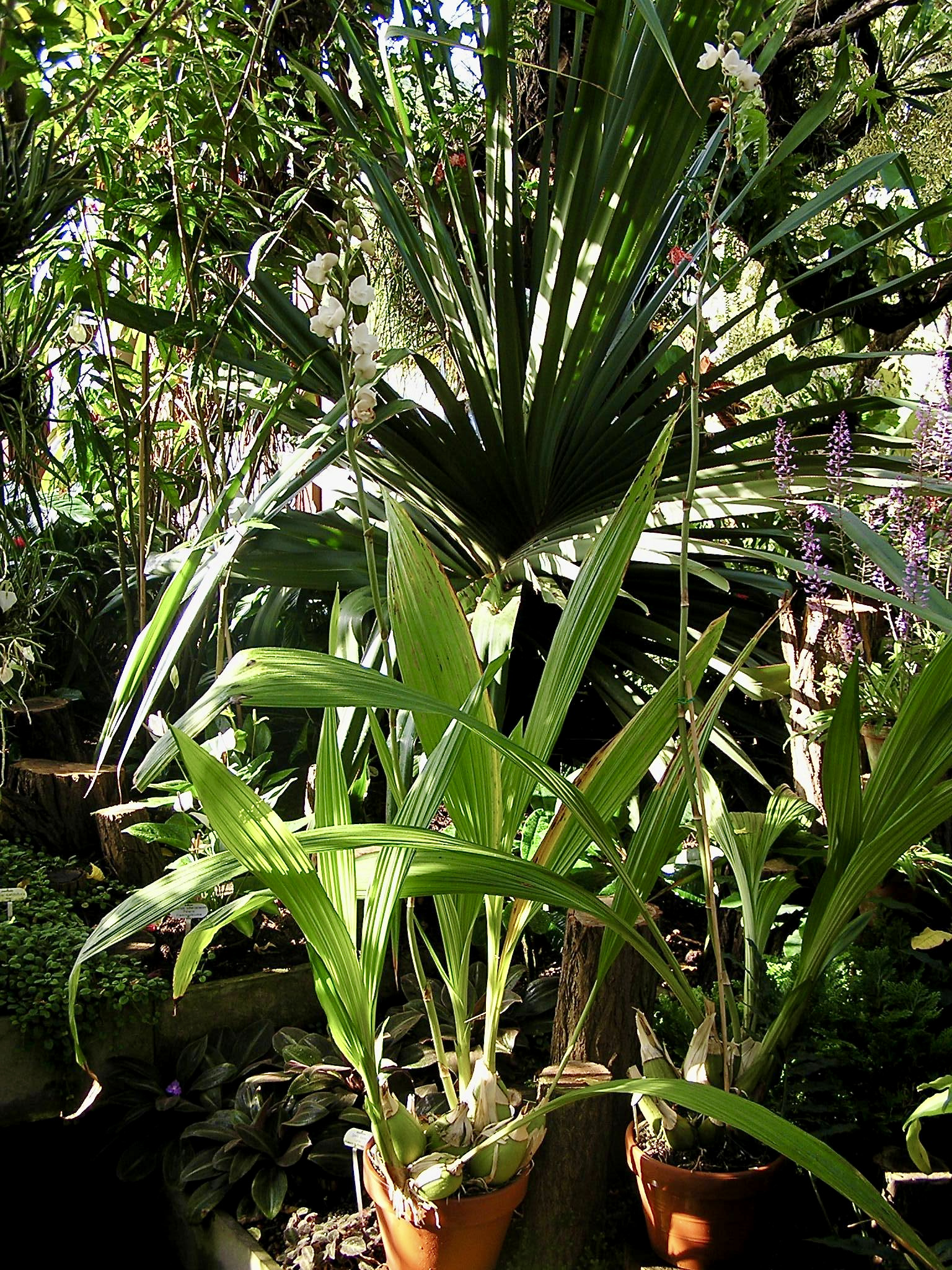
Scientific name: Peristeria elata
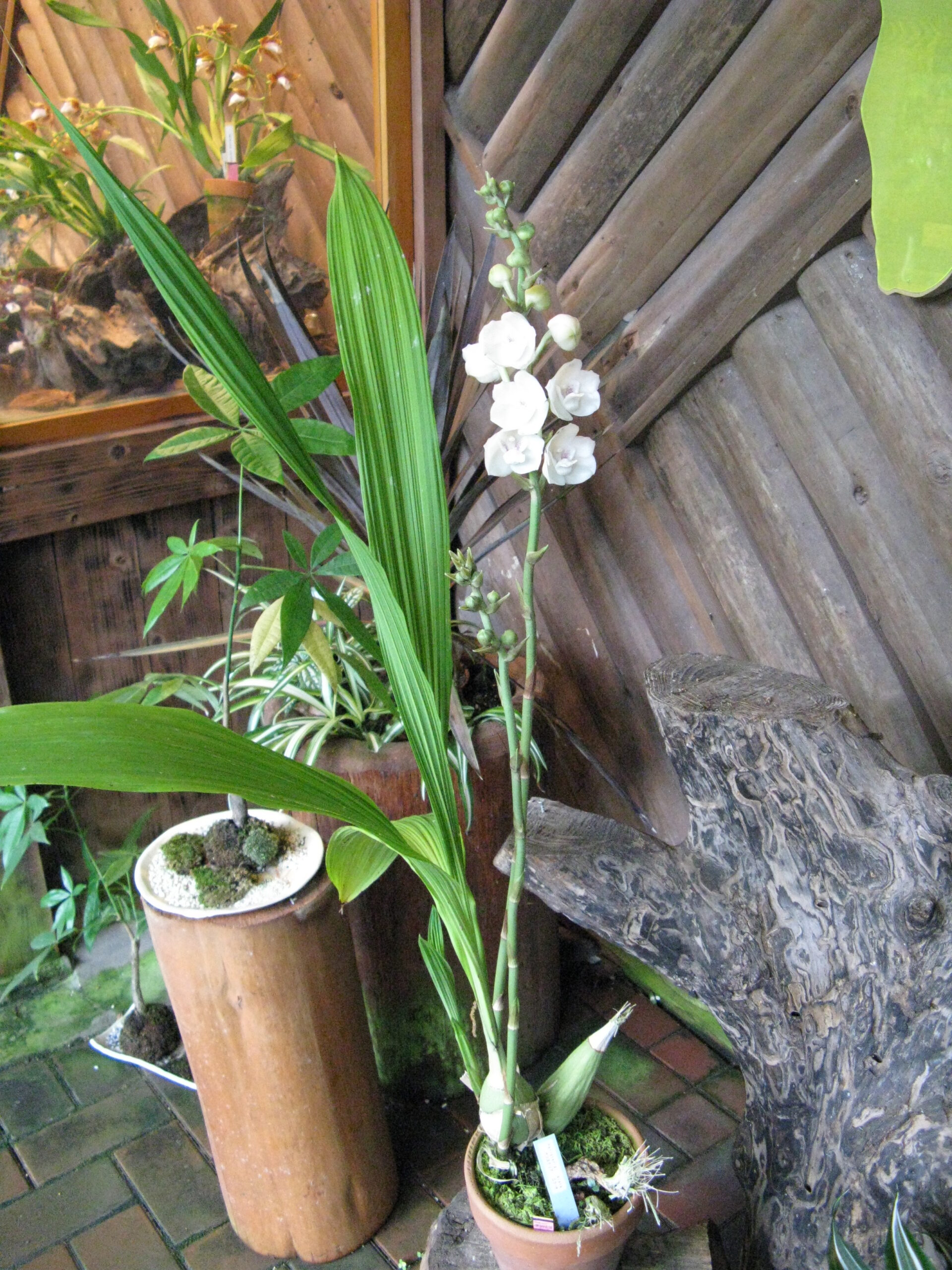
The Holy Ghost Orchid is one of Panama’s most iconic plants. It produces fragrant, fleshy white flowers. At the center of the blossom, a structure resembles a small dove, inspiring the plant’s common name.
The species is native to Panama and also occurs in other parts of tropical America. Its beauty has made it highly desirable among orchid collectors. For this reason, protecting wild populations and their habitats is especially important. Plants should not be taken from the wild for garden decoration.
2. Heliconias: a display of tropical color
Genus: Heliconia
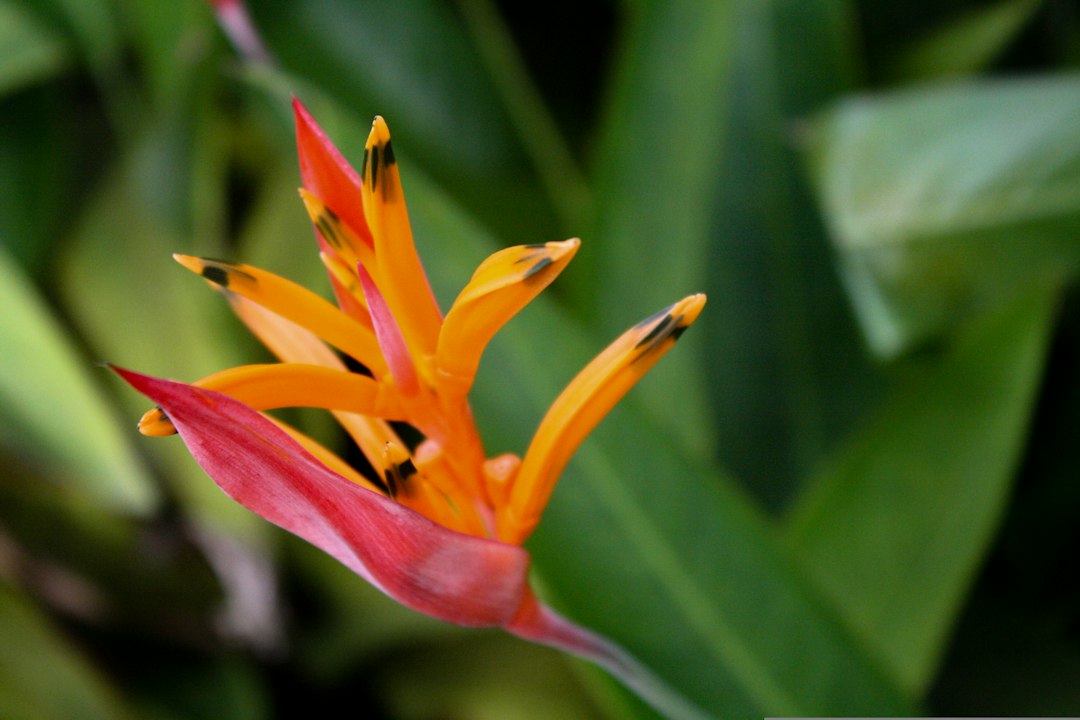
Heliconias are among the most recognizable plants in tropical landscapes. Their flower clusters can feature red, orange, yellow, and green tones, often in combinations that look almost hand-painted.
The most striking structures are the bracts, which surround the true flowers. Many American heliconias provide nectar for hummingbirds, which pollinate numerous species. Native heliconias occur in Panama, although not every species cultivated in gardens is native to the country.
3. Orchids of Panama: a world of flowers among the branches
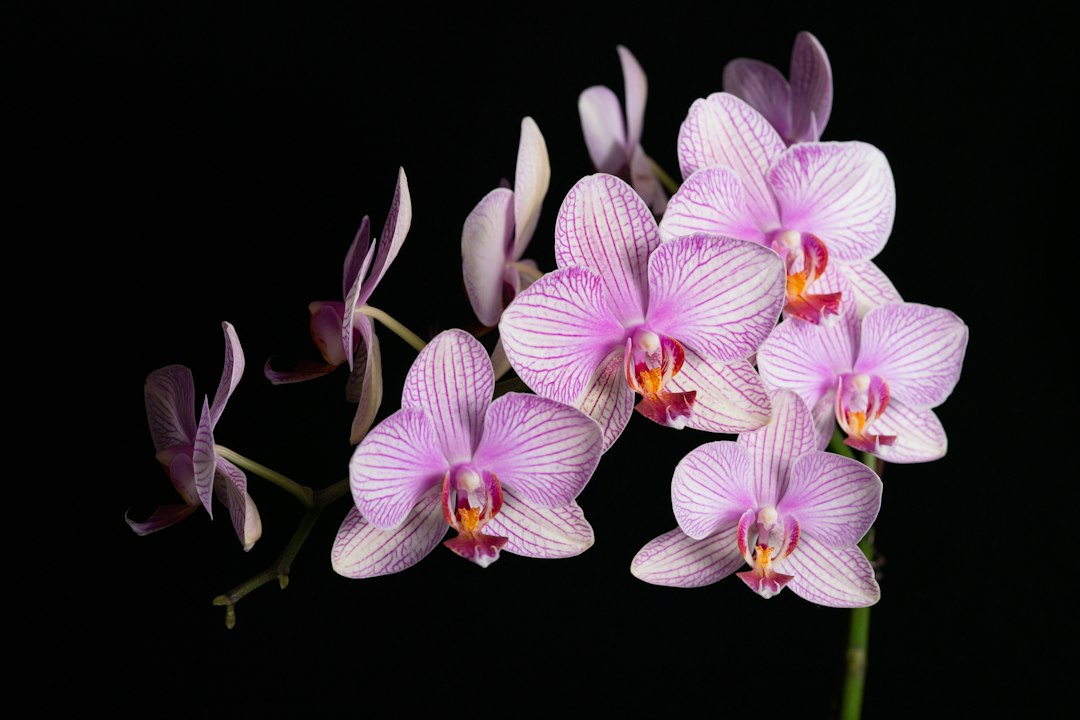
Family: Orchidaceae
Orchids hold a special place among tropical plants because of the extraordinary variety of their flowers. Panama is home to species that grow on trees, others that live in the soil, and others adapted to humid mountain environments.
Epiphytic orchids use branches for support but do not parasitize their host trees. Their roots can take advantage of moisture in the air, rainfall, and organic matter accumulated on bark. The Holy Ghost Orchid is one of the country’s best-known orchids, but it represents only a small part of the family’s diversity.
4. Bromeliads: natural gardens growing on trees
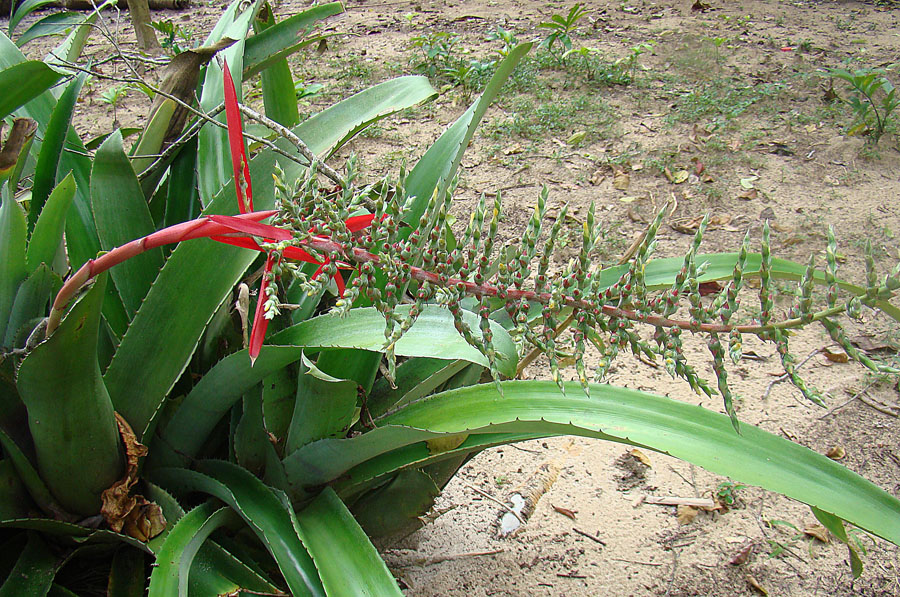
Family: Bromeliaceae
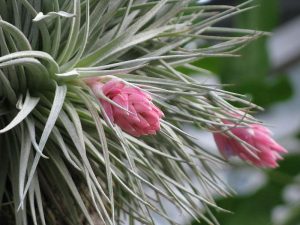
Bromeliads are characteristic plants of the Americas. Many grow on trunks and branches, where they find support and benefit from moisture in the surrounding air. Others grow on the ground.
Some species form rosettes of leaves that hold water, creating tiny habitats for small organisms. Panama has native bromeliads as well as species cultivated as ornamentals. It is best to feature identified examples rather than treating all bromeliads as if they were one plant.
5. The red passionflower: an extraordinary tropical vine
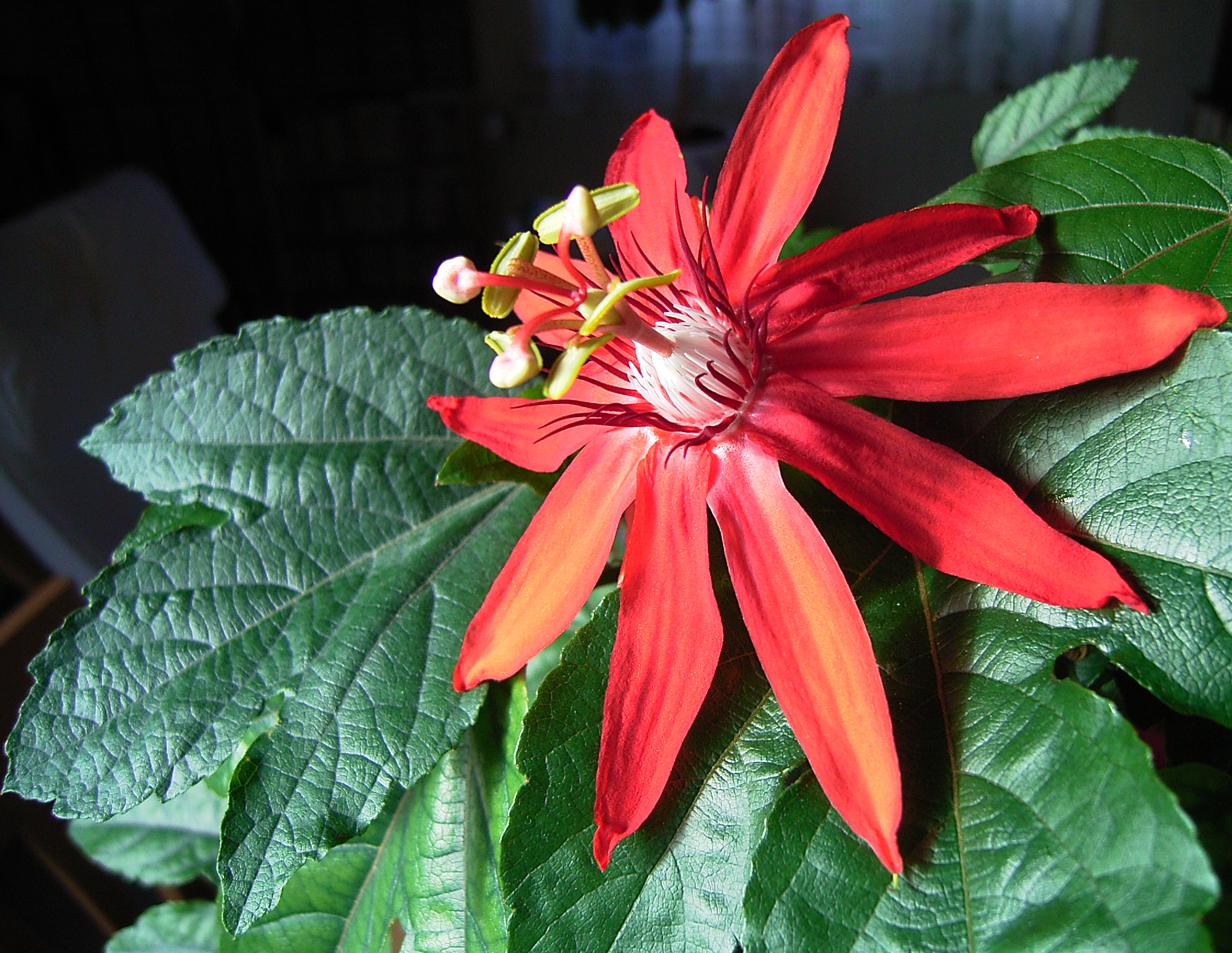
Scientific name: Passiflora vitifolia
The red passionflower is a tropical climbing vine known for its red flowers and distinctive crown of filaments. Its intricate appearance makes each bloom look like a carefully designed composition.
The species is native to several countries in Central and South America, including Panama. Like other passionflowers, it uses tendrils to climb and reach available sunlight among surrounding vegetation. Its blossoms show how floral structure relates to reproduction and interactions with pollinators.
6. Ornamental gingers: flowers that resemble sculptures
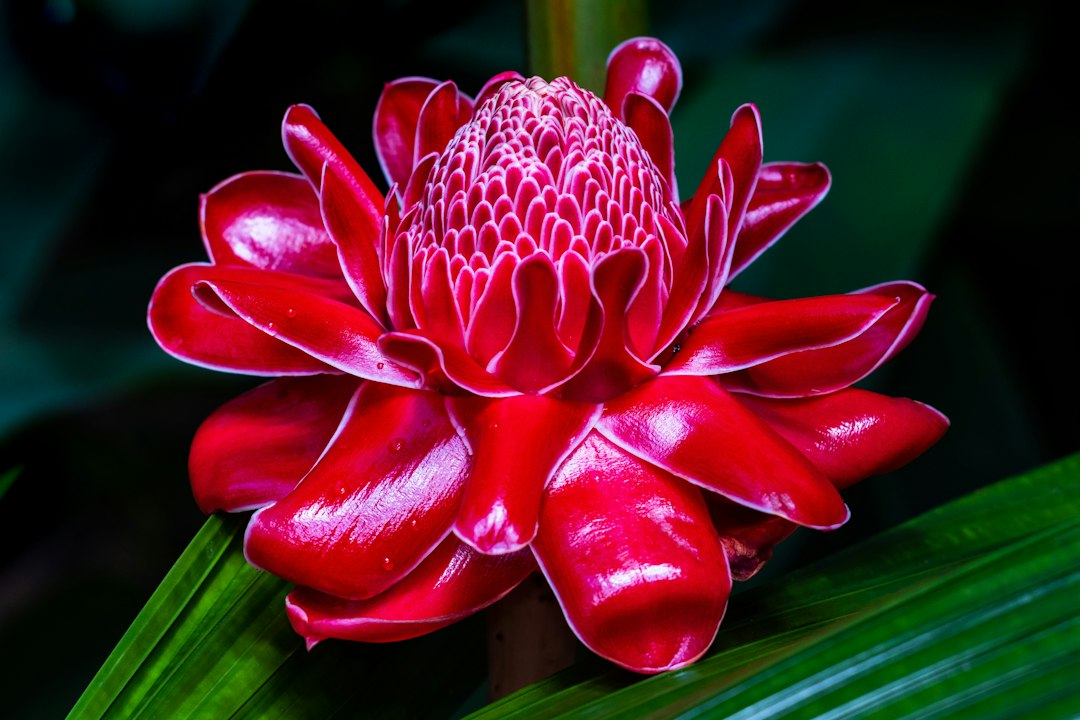
Botanical group: different members of the Zingiberaceae family
The Zingiberaceae family includes gingers and other tropical plants known for their showy flower clusters. In gardens, some have compact structures, layered bracts, and colors ranging from red to yellow.
Not every ornamental plant in this group is native to Panama. Many species are cultivated outside their original range, so it is best to distinguish wild plants from garden specimens.
7. Hibiscus: a popular tropical garden flower
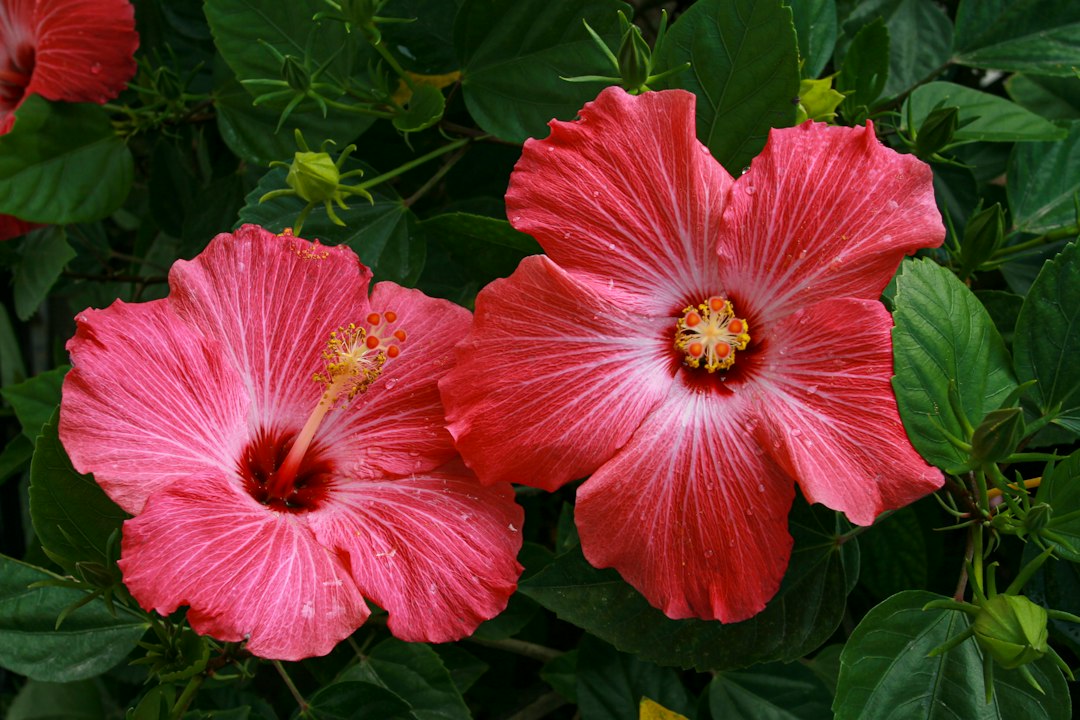
Scientific name of a common ornamental species: Hibiscus rosa-sinensis
Hibiscus, also known as Chinese hibiscus, is a familiar sight in gardens across warm regions. Its large flowers can be red, yellow, pink, orange, or other colors depending on the variety.
Although hibiscus is strongly associated with tropical landscapes, Hibiscus rosa-sinensis is widely cultivated as an ornamental and should not be presented without qualification as a wild native species of Panama.
8. Flowers of tropical trees: color that transforms the landscape
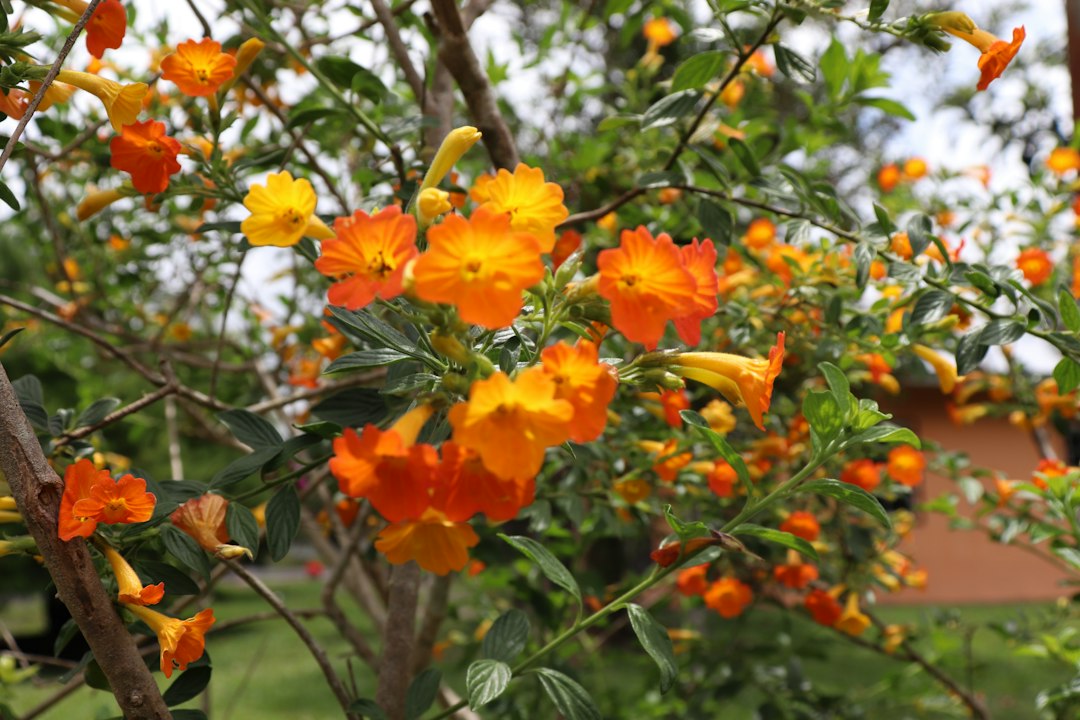
Panama’s floral beauty is not limited to small plants. Some tropical trees produce seasonal blooms that can transform streets, parks, and forests.
Flowering trees, including guayacan species and other colorful trees, may cover their branches with yellow or pink blossoms for relatively short periods. The timing depends on the species, local climate, and conditions in a given year. For accurate identification, confirm the tree species rather than relying on common names that may refer to different plants.
Native and cultivated flowers: an important distinction
Panamanian gardens may contain native plants, introduced species, and horticultural varieties selected for particular colors or shapes. All can be beautiful, but they do not tell the same botanical story.
- Native plants: occur naturally in Panama, although their ranges may extend into other countries.
- Introduced plants: arrived from other regions, often through ornamental cultivation.
- Cultivars and hybrids: have been selected or crossed to produce particular traits, such as flower colors or shapes.
A flower photographed in Panama is not necessarily native to the country.
How to enjoy Panama’s flowers and help protect them
When visiting a botanical garden, forest, or protected area, enjoy flowers without picking them, and avoid buying plants illegally removed from the wild. For orchids and other highly sought-after ornamental plants, choose specimens that have been propagated legally and responsibly.
You can also support conservation by sharing reliable information, respecting natural areas, and using photographs that accurately represent the species.
Panama: a floral paradise waiting to be explored
From the iconic Holy Ghost Orchid to heliconias, bromeliads, passionflowers, and flowering tropical trees, Panama offers a plant world full of contrasts.
Each flower reveals a different way of adapting to the climate, attracting pollinators, and coexisting with other species. Learning about these plants is a way to appreciate the country’s natural richness and remember that its beauty deserves protection.
Which of these tropical flowers would you most like to see in person? Share this article with anyone who loves plants and nature.
Useful products for growing tropical flowers
If learning about these flowers inspires you to grow tropical ornamentals at home or in the garden, these products may be a starting point. Always choose fertilizer suited to the particular plant and follow the label directions; more fertilizer does not necessarily mean more flowers.
1. Fertilizer for tropical plants
This liquid plant food is marketed for indoor and outdoor tropical plants. Check that it is suitable for the species you grow and follow the manufacturer’s directions.
See it on Amazon: View tropical plant fertilizer
2. All-purpose plant fertilizer
A general-purpose option for a range of garden plants. Check its formulation and label directions before using it on a flowering ornamental.
See it on Amazon: View Miracle-Gro all-purpose plant food
Affiliate disclosure: As an Amazon Associate, Flores del Corazón earns from qualifying purchases. We may receive a commission if you buy through these links, at no additional cost to you.
Botanical sources for further reading
- Smithsonian Tropical Research Institute: botany in Panama
- Biota of Panama: Peristeria elata
- Kew Science: Passiflora vitifolia
- Smithsonian: heliconias and conservation
Share this content: