Flowers with Impossible Colors: Nature’s Most Surprising Shades
Nature does not need artificial colors to surprise us. Some flowers look almost black, others combine green and purple, and some display patterns that resemble brushstrokes or carefully arranged spots. These “impossible” shades have botanical explanations, including pigments, floral structures, genetic variation, and the way light reaches petals.
This guide explores flowers known for unusual colors. Scientific names and natural ranges should always be checked, since photographs and common names can be misleading.
1. Tacca chantrieri: the dark bat flower
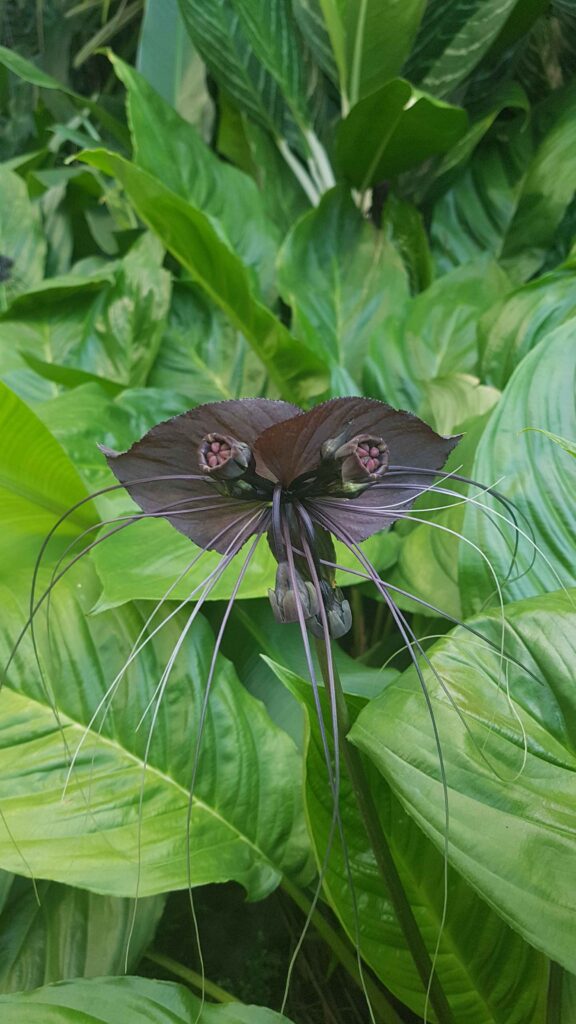
Scientific name: Tacca chantrieri
The so-called bat flower is known for very dark purple, almost black floral structures and long, hanging filaments that resemble whiskers. What appears to be one large dark bloom is an inflorescence with striking bracts and smaller flowers grouped at the center.
It is a tropical plant associated with warm, humid environments. Its unusual appearance has made it popular with collectors, but it needs suitable growing conditions. In photographs, lighting can make its colors look black, dark brown, or purple.
2. Cosmos atrosanguineus: the chocolate cosmos
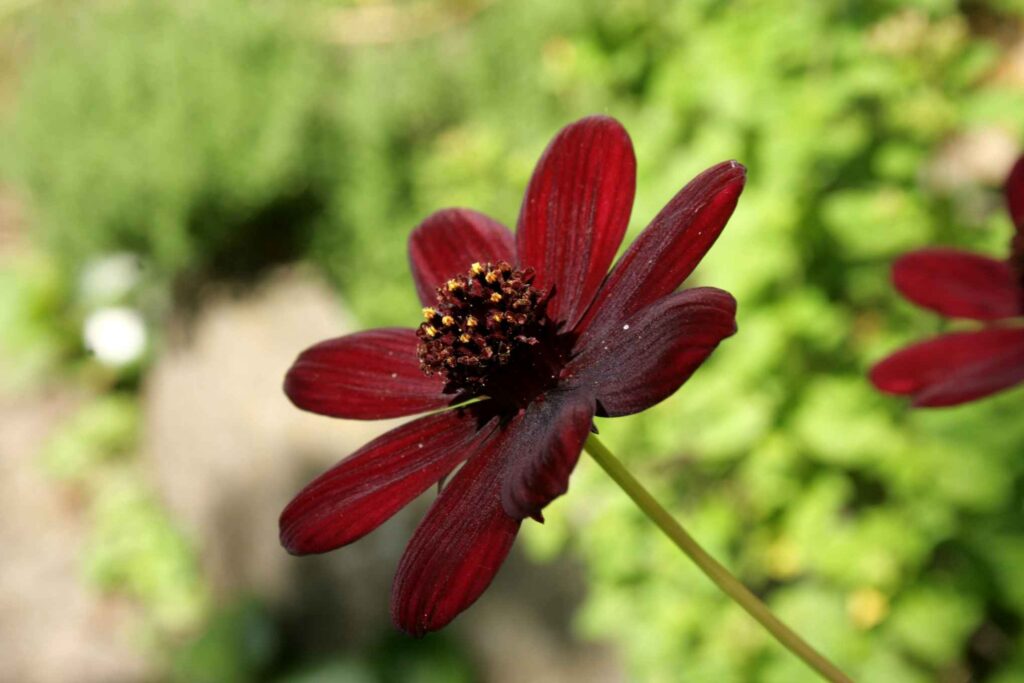
Sten/ Wikimedia Commons, CC BY-SA 3.0
Scientific name: Cosmos atrosanguineus
This species is known for deep red to reddish-brown flowers, often described as chocolate-colored. The dark blooms contrast with the flower center and green foliage. Although images sometimes present it as a black flower, it is not literally black; its color is generally in the range of deep maroon and dark brown.
Plants sold by nurseries may come from cultivated and selected material, so check a plant’s origin and cultivar characteristics before attributing a particular trait to every plant of the species.
3. Green orchids: subtle botanical beauty
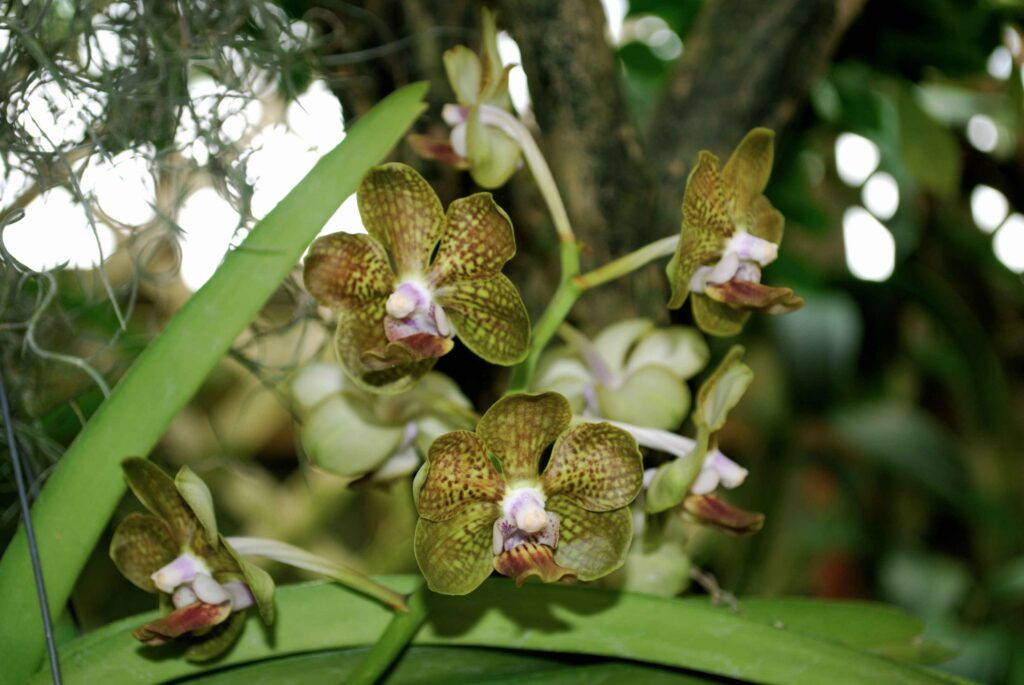
Family: Orchidaceae
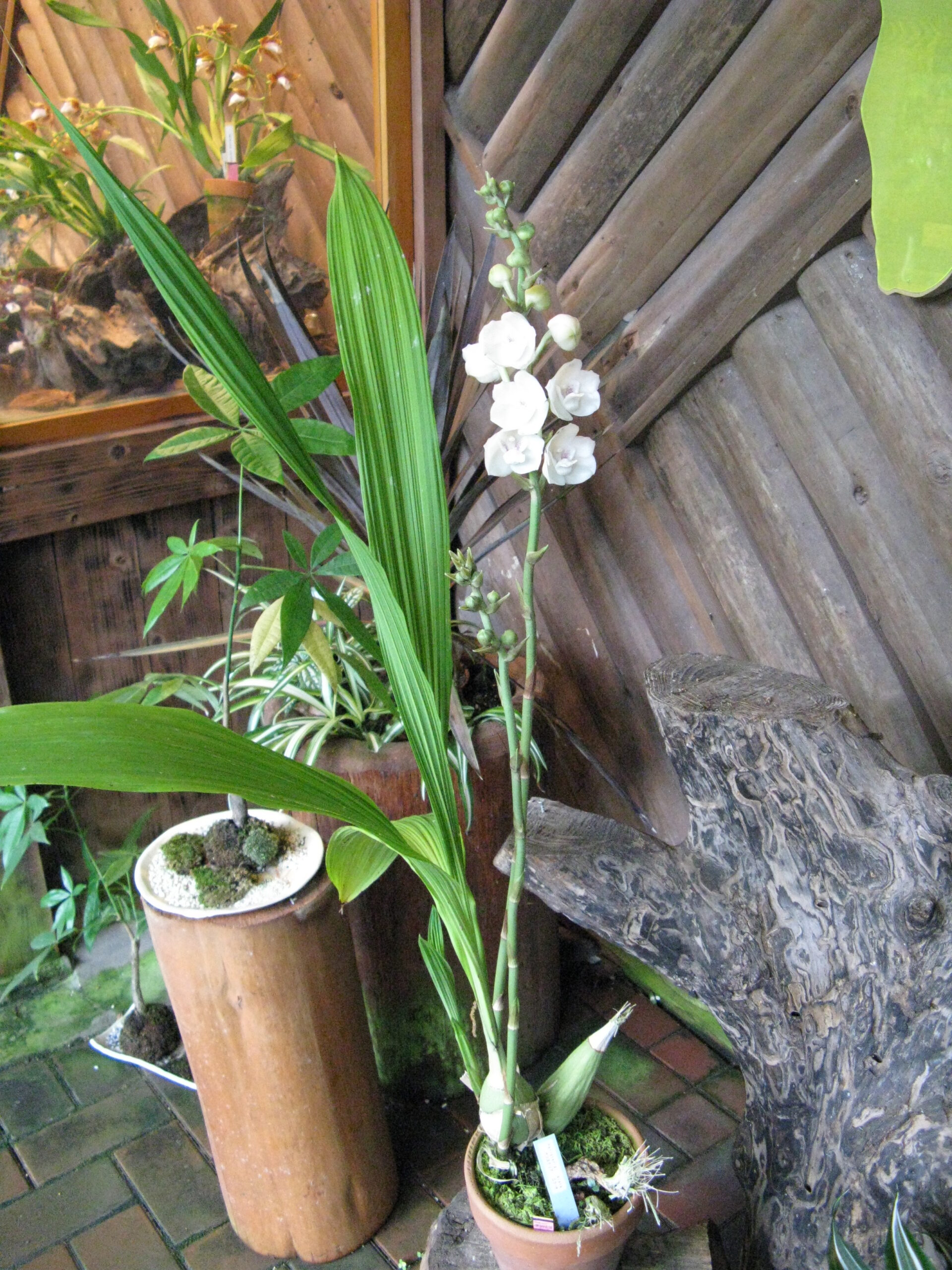
Some orchids produce green flowers or combinations of green with white, cream, yellow, or purple. Chlorophyll and other pigments, together with tissue structure, contribute to their appearance. Green coloration may help a flower blend with foliage, although its ecological role depends on the species and its pollinators.
“Green orchid” is not the name of a single species. For accurate descriptions, identify the genus and, when possible, the species or cultivar. Green-flowered orchids do not all share the same distribution or growing requirements.
4. Flowers with spots, stripes, and striking contrasts
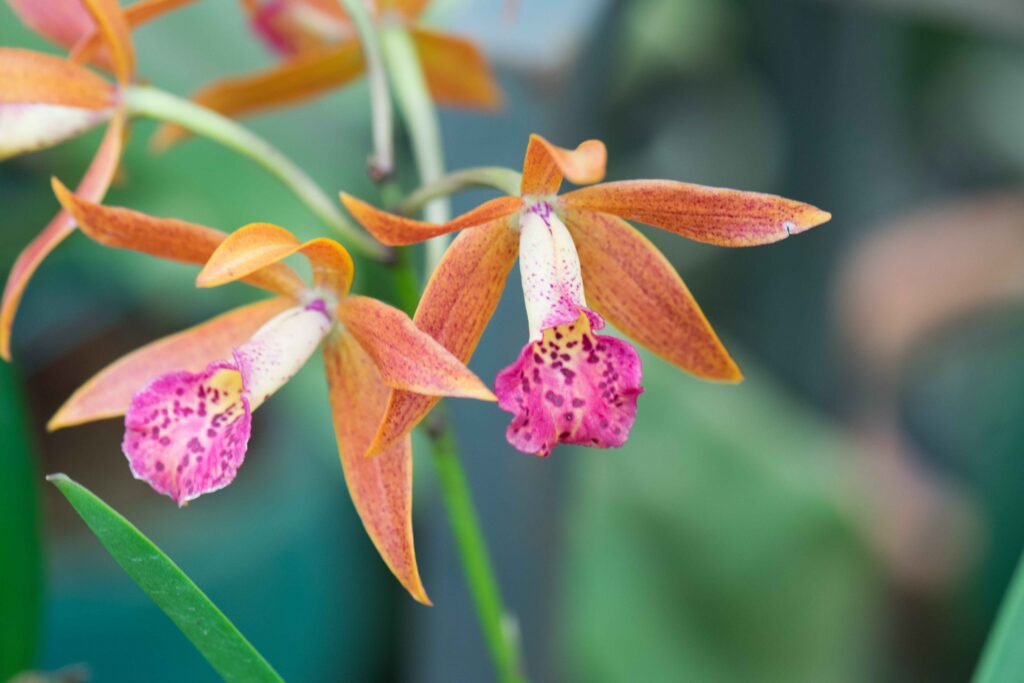
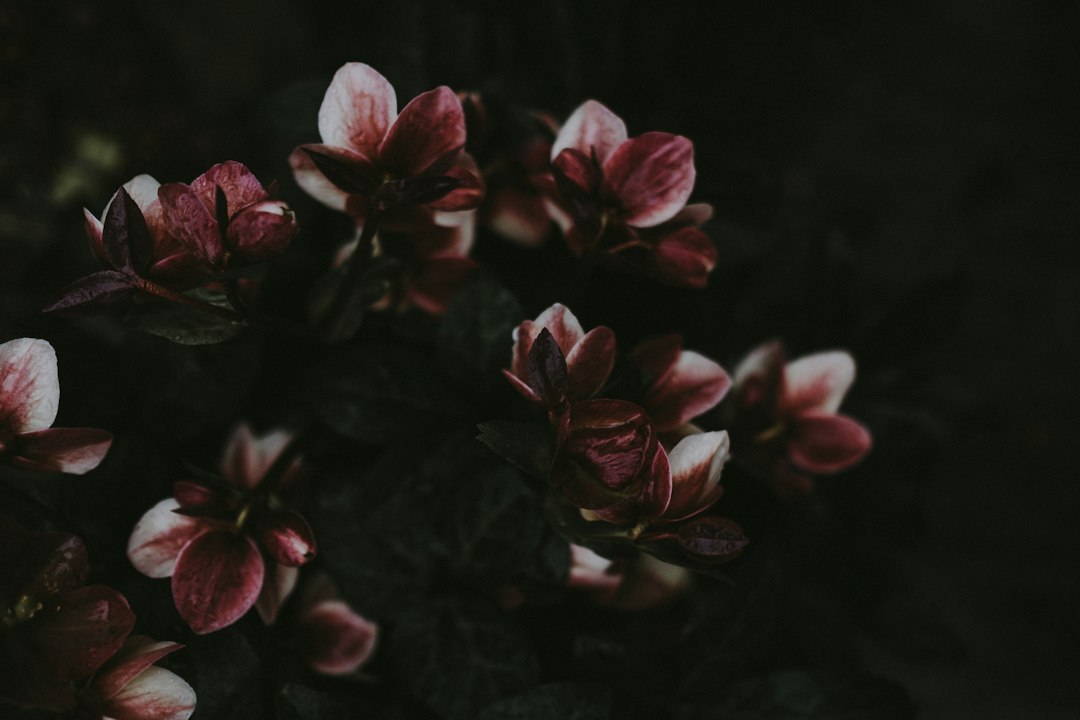
Many flowers display veins, dots, stripes, or contrasting patches of color. In some species, these patterns may act as visual signals for pollinators or guide visitors toward nectar; in others, their role is less clear and needs to be studied for each species.
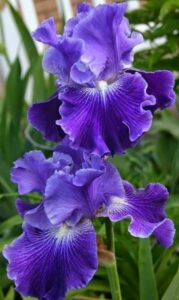
Orchids are especially famous for complex patterns, but irises, pansies, and many other ornamental plants also have multicolored petals. Horticultural varieties may show patterns selected by growers that do not occur in wild populations.
5. Blue, violet, and indigo: colors that can be confused
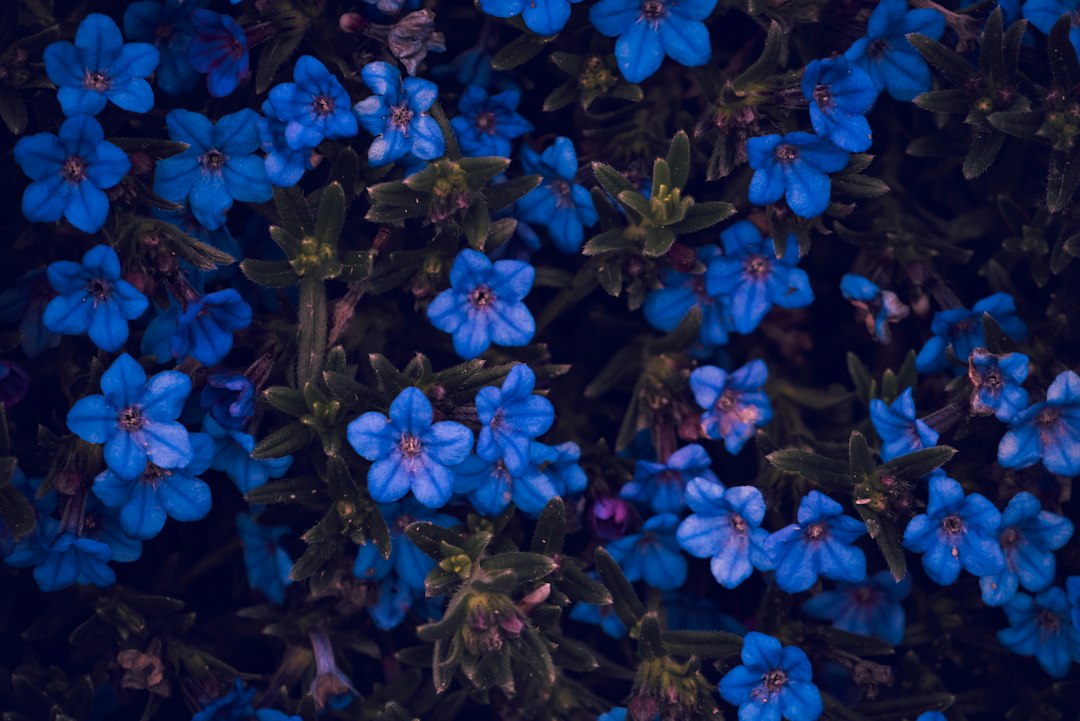
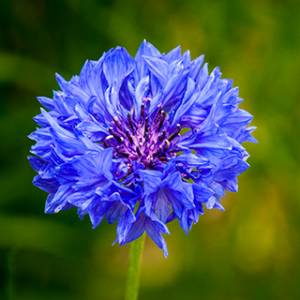
A flower that looks blue in one photograph may appear violet in another. Pigments, cell acidity, petal structure, and lighting all influence the result. A camera’s white balance and image saturation can also exaggerate or shift color.
For that reason, absolute claims such as “the bluest flower in the world” should be avoided unless the method for measuring color is explained. It is more accurate to describe the observed shade and name the species or cultivar, supported by reliable botanical sources.
How do these extraordinary colors arise?
- Pigments: molecules such as anthocyanins and carotenoids contribute to many red, purple, yellow, and orange shades.
- Chlorophyll: associated with green coloration, it can also occur in floral tissues.
- Structure: the shape and microscopic organization of tissues can change how light is reflected and scattered.
- Genetics and cultivation: natural variation, selection, and horticultural crosses can produce unusual color combinations.
Flower color rarely depends on a single cause. The combination of pigments, structure, genetics, and light helps explain why the same bloom may look different under different conditions.
How to choose images that represent flowers accurately
For an article about unusual colors, look for photographs that identify the species and avoid heavily edited images that make a maroon flower appear black or a violet flower appear blue. On Wikimedia Commons, Unsplash, Pexels, and Pixabay, check each file’s license before reuse, especially when an article contains advertising or affiliate links. Save the original URL, photographer’s name, and any required attribution.
Nature keeps finding new ways to surprise us
The bat flower, chocolate cosmos, green orchids, and flowers with complex patterns show that plant colors extend far beyond familiar shades. Their colors are not impossible: they result from natural processes and, in some cases, centuries of horticultural selection.
Which floral color do you find most extraordinary? Share this article with someone who enjoys discovering the wonders of plants.
An illustrated read about imaginary plants
Alongside real flowers, imagination has created fantastic plants with extraordinary shapes and colors. This illustrated book focuses on plants from fictional worlds, so it is best enjoyed as artistic inspiration rather than as a scientific botanical reference.
Botanica Fantastica: The Illustrated Guide to Fantastical Plants from Fictional Worlds
A creative choice for readers who enjoy illustration and imaginative interpretations of the plant kingdom.
See the book on Amazon: View Botanica Fantastica
Affiliate disclosure: As an Amazon Associate, Flores del Corazón earns from qualifying purchases. We may receive a commission if you buy through this link, at no additional cost to you.
Related articles
If you enjoy unusual flower colors, explore the world’s most extraordinary blue flowers and the remarkable flowers of the Amazon rainforest.
Botanical sources for further reading
- Plants of the World Online, Royal Botanic Gardens, Kew — accepted names and distribution.
- Royal Horticultural Society — cultivation and ornamental varieties.
- Missouri Botanical Garden Plant Finder — ornamental plant references.
Share this content: