Wild roses (banksiae, canina and centifolia)
Roses have been grown for centuries for their beauty, fragrance and remarkable variety. Breeding and hybridization have produced countless cultivars, although there is no single fixed worldwide count. Gardeners commonly distinguish species or wild roses, old garden roses (historical groups dating from before the introduction of ‘La France’ in 1867) and modern roses. These are horticultural categories, not formal botanical ranks.
Here we look at three roses with different origins. Rosa banksiae and Rosa canina occur in the wild, whereas Rosa × centifolia is a cultivated hybrid. Despite the article’s title, they are not all wild species.
Wild species and a historic garden rose
Rosa banksiae — Lady Banks’ rose
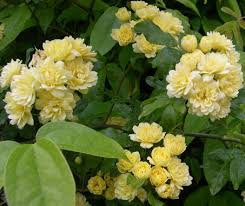
Native to China, Lady Banks’ rose is a vigorous climber that can grow well beyond six metres when given sufficient space and support. Its stems are almost thornless, and its glossy leaves may persist through winter in mild climates. It bears abundant white or yellow flowers in spring, single or double depending on the cultivar. Fragrance varies between forms. It is well suited to large walls and pergolas.
Lady Banks’ rose flowers best in full sun, in a sheltered position with fertile, well-drained soil. Established plants tolerate some dry periods, while young plants need regular watering. Frost tolerance depends on the cultivar and local conditions; severe cold can damage the plant.
It flowers mainly on growth produced in earlier seasons, so prune to shape or control it just after flowering. Remove dead or congested stems and avoid hard winter pruning, which may remove the following spring’s flower buds.
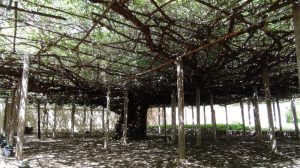
Tombstone, Arizona, is home to a celebrated nineteenth-century Lady Banks’ rose that has spread over an extensive support structure. It is widely described as one of the world’s largest rose bushes by the area it covers. Its long history shows how large this vigorous species can become under suitable conditions.
Rosa canina — dog rose
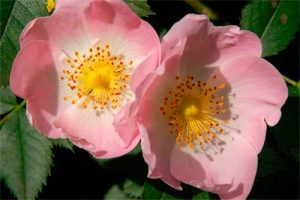
The dog rose is a deciduous shrub of hedgerows and woodland edges, native to much of Europe and neighbouring parts of Asia and Africa. Its arching stems carry curved prickles, and its compound leaves generally have five to seven toothed leaflets. The flowers, usually pale pink or white, typically have five petals.
After flowering it forms red rosehips: fleshy structures surrounding the true fruits (achenes). A rosehip is not a simple berry.
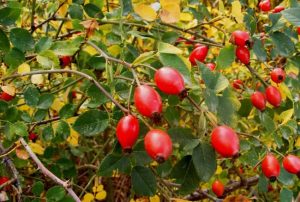
The common name “dog rose” has been linked both to the shape of its prickles and to historical folk remedies for rabies. These are explanations from tradition, not medical advice. Rabies is a medical emergency requiring prompt professional care and appropriate post-exposure prevention.
Rosehips contain vitamin C and other plant compounds and are used in jams, herbal teas and other foods. Flowering and fruiting times vary with local climate, generally spanning spring to autumn in temperate regions.
Traditional uses and precautions
Rosa canina rosehips have long been used as food and in traditional herbal preparations. Their vitamin C content varies with ripeness, storage and processing. Clinical evidence is insufficient to recommend homemade rosehip remedies for nervous disorders, acne or sexual dysfunction.
Use only correctly identified, food-safe fruit and prepare it properly, removing the irritating hairs and achenes where appropriate. Anyone managing a medical condition, pregnancy or medication should seek professional advice before using herbal preparations therapeutically.
Rosa × centifolia — cabbage rose
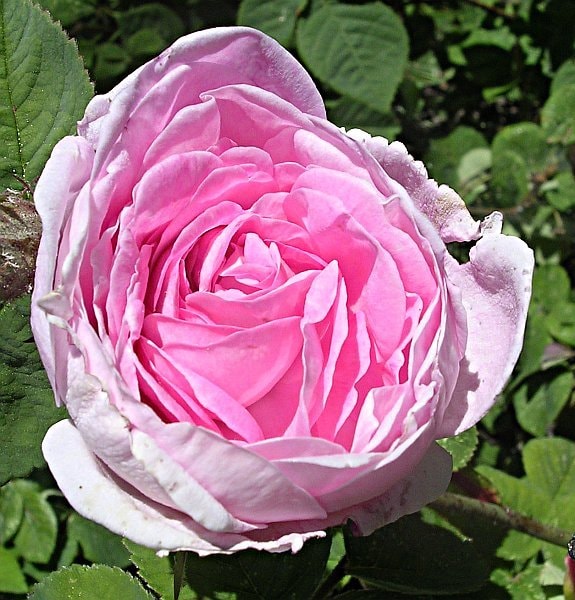
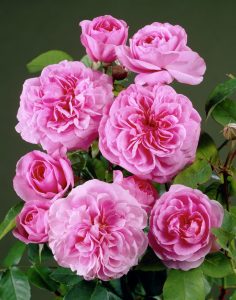
Also known as the hundred-petalled rose, Rosa × centifolia is a historic cultivated hybrid, rather than a wild species. Its densely packed petals and sweet fragrance have made it a favourite of traditional gardens and perfumers.
Its petals are used to make fragrant products, including rosewater and cosmetic extracts. A valuable fragrance ingredient is not necessarily an effective medical treatment.
Cultural and traditional medicinal uses
Rosa × centifolia petals have a long history in traditional preparations, perfumery and cosmetics. Food-grade petals grown without unsuitable pesticide residues are also used in some recipes.
Claims that this rose heals wounds or treats bacterial infections, constipation or intestinal parasites lack sufficient clinical evidence for treatment recommendations. Concentrated essential oils can irritate the skin or cause adverse reactions and should not be swallowed without qualified medical guidance.
Pests, pruning and care
Depending on growing conditions, these roses may be affected by aphids, mites, powdery mildew or black spot. Inspect plants, improve airflow and use appropriate integrated pest-management measures when needed. For more information about garden pests, see our article here.
Pruning varies by rose type. Lady Banks’ rose and many once-flowering old roses are lightly pruned after blooming, while repeat-flowering varieties may need a different schedule. One pruning rule does not suit every rose.
Roses have enriched gardens and cultural traditions for centuries. Understanding their origins and growing needs helps us appreciate them without confusing traditional beliefs with proven medical treatments.
If you enjoyed this article, share it and tell us which roses you grow.

Share this content: