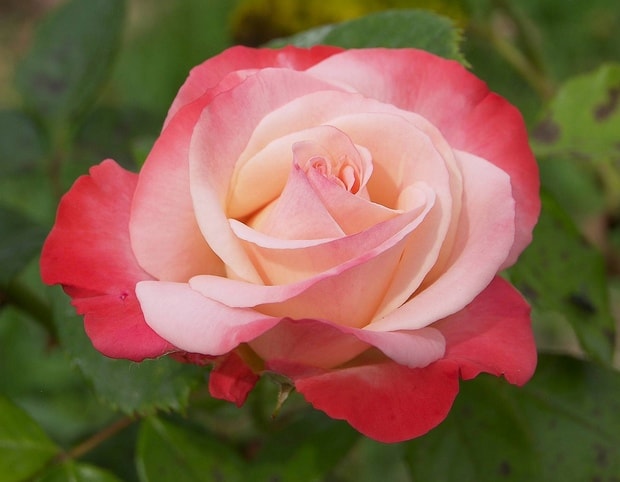
The ancient rosebushes
In earlier articles, we explored the horticultural classification of roses, including wild roses. This time we turn to old garden roses: historic groups with remarkably different flower shapes, fragrances, and blooming habits.
Old garden roses
A rose group is generally classified as an old garden rose if it existed before 1867, the year the hybrid tea ‘La France’ was introduced. The date refers to the establishment of the class, not necessarily the introduction date of every cultivar in it. Some old roses flower once a year, while others bloom repeatedly. Hardiness, disease resistance, and care requirements vary considerably among groups and cultivars.
Here are some of the principal historic rose groups. Modern patio roses are included later for comparison, but they are not an old garden rose class.
Alba
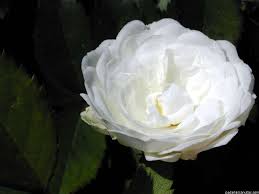
Alba roses are historic hybrids with complex ancestry, valued for their white to pale-pink flowers and fragrance. They usually form tall, arching shrubs with gray-green foliage. Their precise origins remain uncertain, so it would be misleading to assign every Alba rose to one particular cross or to a firmly established date in Roman times.
Most Alba roses have one main flush of flowers in late spring or early summer, depending on climate. Flowers may be single, semi-double, or double; their stamens are not always visible. Many tolerate partial shade better than modern hybrid teas, although they still appreciate good light. Well-drained soil and air circulation help prevent disease.
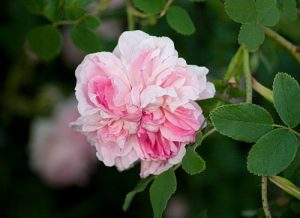
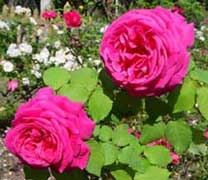
Bourbon roses take their name from the former Île Bourbon, now Réunion Island, in the Indian Ocean. Their history is associated with crosses between China roses, including ‘Old Blush’, and repeat-flowering Damask roses. They played an important part in the development of repeat-blooming garden roses.
Many Bourbon roses grow into vigorous shrubs, sometimes producing long canes that can be trained against a support. Their often fragrant, double flowers appear in repeated flushes from late spring into autumn under favorable conditions. Disease resistance varies: some cultivars are prone to powdery mildew or black spot, so none should be described as universally trouble-free.
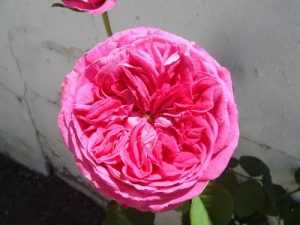
Bourbon blooms vary from rounded cups to densely petalled flowers. Generations of breeding expanded the range of sizes, colors, and fragrances. Prune according to the cultivar’s growth habit, avoiding indiscriminate removal of flowering wood.
Centifolia
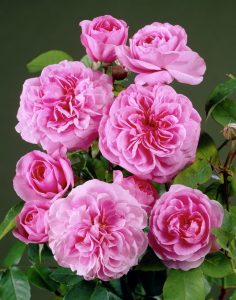
Centifolia roses, also known as Provence or cabbage roses, developed as a horticultural group in Europe and became closely associated with seventeenth-century Dutch gardens. Their name refers to the profusion of petals rather than an exact count of one hundred. They are generally thorny, arching shrubs with gray-green leaves.
The large, rounded, strongly scented flowers usually appear in a single seasonal flush, in late spring or early summer depending on the region. Shades of pink predominate, although white and deeper-pink forms also exist. The weight of the blooms may cause the stems to bow.
Petals from several fragrant rose groups, including some Centifolia cultivars, have traditionally been used in perfumery, cosmetics, and cooking. Not all rose water comes from Centifolia: Damask roses and other fragrant varieties are also used. Traditional medicinal uses are part of cultural history, not proof of clinical effectiveness. For food, use only edible, appropriately grown, pesticide-safe petals.
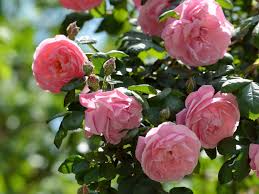
Choose a bright site with several hours of sun and fertile, well-drained soil. Centifolia roses tolerate different soil textures but dislike prolonged waterlogging. Water according to local conditions and actual soil moisture. Because they generally flower on established wood, heavy pruning just before blooming can remove the season’s flower buds.
China
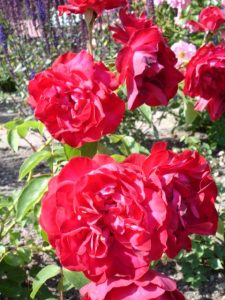
China roses have been cultivated in East Asia for centuries and profoundly influenced European rose breeding from the eighteenth century onward. Their defining contribution is repeat flowering. In certain cultivars, notably ‘Mutabilis’, petal colors shift as blooms age; this is not a uniform trait of every China rose.
China roses range from compact to larger shrubs, bearing single or double flowers individually or in small clusters. In mild and warm climates, many bloom over an extended season. Numerous cultivars are vulnerable to severe frost and need protection in cold regions. They are useful in borders and large containers when given light and airflow.
Hybrid Perpetual
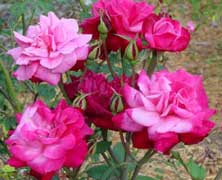
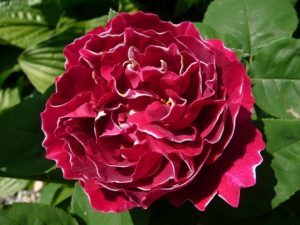
Hybrid Perpetual roses, also called remontant hybrids, were especially popular in the nineteenth century and Victorian gardens. Despite their name, they do not bloom continuously: many produce a strong main flush followed by a smaller repeat flowering, depending on cultivar and climate. Their large, often double, fragrant flowers made them favorites for exhibition.
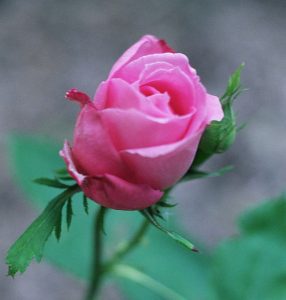
This is a complex horticultural group incorporating ancestry from Bourbon, Damask, China, and other historic roses. Many cultivars form tall, upright, vigorous shrubs. Flowers may be solitary or carried in small clusters. Good airflow, balanced feeding, and cultivar-appropriate pruning are important for healthy growth.
Moss
Moss roses are named for the fragrant glandular growths on their sepals and flower stalks, which resemble moss. The group arose through mutations among old garden roses, especially Centifolia, followed by further breeding. When gently rubbed, the glandular covering may release a resinous, sometimes pine-like scent.
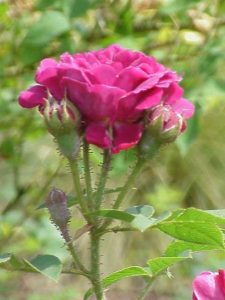
Many moss roses flower once a year, while others with repeat-blooming ancestry may produce additional flushes. Their foliage and growth habits differ by cultivar. The moss-like covering is a natural characteristic, not mold or a plant disease. As with other roses, watering and pruning should reflect the plant’s actual needs.
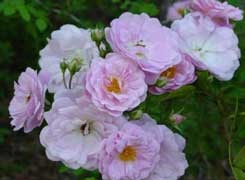
Noisette
Noisette roses originated in early nineteenth-century South Carolina, United States. Their story involves John Champneys and his rose ‘Champneys’ Pink Cluster’, descended from China and musk roses. Philippe Noisette helped distribute these roses, and his brother Louis developed and introduced further selections in France. Noisettes became an important group of repeat-blooming old garden roses.
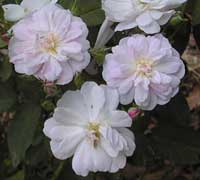
Early Noisettes produced generous clusters of small, fragrant flowers. Many have climbing or arching growth. Later crosses with Tea roses produced the Tea-Noisettes, often with larger flowers but generally reduced cold tolerance. How often a plant flowers depends on the cultivar and growing conditions.
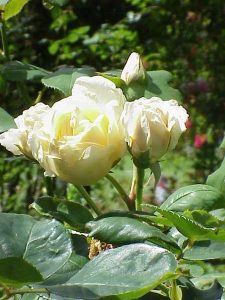
Grow Noisettes in well-drained soil with adequate light, providing a sturdy support for climbing cultivars. In cold areas, choose hardier selections or protect tender ones. Avoid severe pruning without first checking their flowering habit, and monitor for leaf diseases: old roses are not automatically immune.
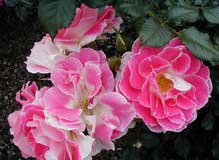
Patio roses (modern group)
Patio roses are not part of the historic classes established before 1867. They are modern roses selected for relatively compact growth and suitability for containers, patios, and small gardens. Flowers may be single or double, solitary or clustered, and many cultivars bloom repeatedly during the growing season.
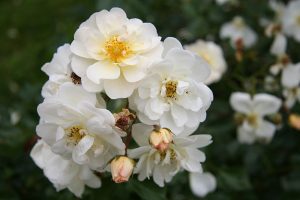
Although patio roses are sometimes sold as indoor decorative plants, they usually perform better outdoors with plenty of light. In dim rooms they often weaken and flower poorly. Their winter behavior varies with cultivar and climate: some become dormant seasonally, but not all need intense winter cold to survive.
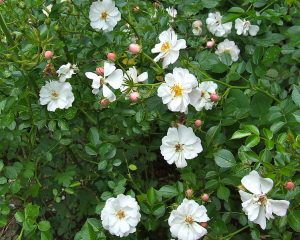
Use free-draining potting mix and water when the surface begins to dry, never leaving roots sitting in water. Feed moderately during active growth according to the fertilizer instructions. Remove dead stems and prune for the cultivar’s habit. Deadheading can encourage further flowers in repeat-blooming roses, but cannot make a once-flowering rose bloom repeatedly.
Portland
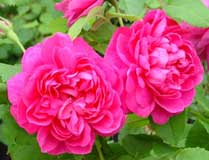
Portland roses are a historic group of generally compact shrubs with fragrant flowers and varying degrees of repeat bloom. Their origins are linked to older European roses, especially Damask and Gallica lines; it is inaccurate to describe them simply as Bourbon derivatives. They are appealing in borders and gardens where fragrance matters but space is limited.
Sempervirens
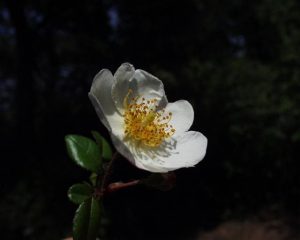
Hybrid Sempervirens roses are descended from crosses involving Rosa sempervirens, a species that is evergreen or semi-evergreen in mild climates. Many produce long canes that can be trained over pergolas and other supports. They usually offer an abundant flush in late spring or early summer, rather than invariably blooming at the end of summer. Flower forms vary from single to double.
Tea
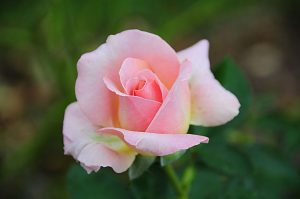
Tea roses are a historic class distinct from modern hybrid teas. They developed from China rose lines and other Asian roses, with complex ancestry that includes Rosa gigantea. They did not all originate from one documented cross. Gardeners prize their elegant buds, delicate fragrance, and ability to repeat bloom in suitable climates.
Tea rose flowers often come in cream, pink, yellow, or apricot shades. Some nod on slender stems and appear singly or in small clusters. Many flower in successive flushes through much of the warm season, although flowering changes with temperature, water, and growing conditions.
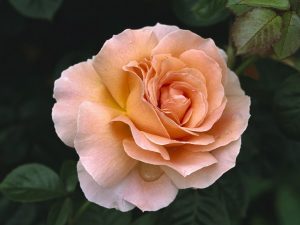
Tea roses generally appreciate sun, protection from hard frosts, and fertile, well-drained soil. Pruning should be restrained and suited to the cultivar, rather than copied directly from modern hybrid tea instructions.
Other old garden rose classes include Gallica and Damask, among many more. Each deserves attention for its own distinctive history and growing habits.
I never tire of the beauty of these historic roses. I would love to grow them all, but until then I am happy to share them here. If you enjoyed the article, leave a comment or share it with someone who loves flowers.

Related article: Wild Roses (Eglenteria, gallica and pimpinellifolia)
Share this content: