Flowers in Antarctica: Antarctic hairgrass and pearlwort
Are there flowers in Antarctica?
Yes. Antarctica has native flowering plants, even though its climate is exceptionally harsh.
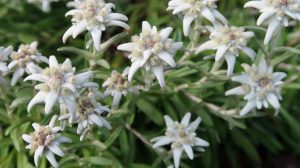
Most of the Antarctic continent is covered by ice, but mosses, lichens and two native flowering vascular plants grow in some ice-free coastal and rocky habitats. They are Antarctic hairgrass (Deschampsia antarctica) and Antarctic pearlwort (Colobanthus quitensis). Both occur mainly around the Antarctic Peninsula and the South Shetland Islands, where suitable habitats are exposed during the short austral summer.
These two species are adapted to cold and freezing, although they follow different strategies.
How Antarctic flowering plants survive
Antarctic hairgrass
This perennial grass grows among rocks and in moist, ice-free soils. It can self-pollinate, an advantage where insect pollinators are scarce. Antifreeze proteins (AFPs) are among the cold-tolerance mechanisms studied in this species. They can restrict ice-crystal growth but do not prevent all freezing; survival involves several physiological adaptations.


Antarctic pearlwort
This small member of the pink family forms compact cushions only a few centimetres tall. Without flowers it can resemble moss, but during the austral summer it produces tiny, usually yellowish flowers rather than large bell-shaped blooms.
Antarctic pearlwort accumulates soluble compounds, including sugars, that help protect its cells from cold. Freezing tolerance involves several physiological mechanisms rather than a single universal strategy.
Antarctic plants have also adapted their photosynthesis to extreme cold. These species can maintain photosynthesis at low temperatures, but their performance varies with species, population, light and acclimation. A single optimal temperature or fixed percentage of activity should not be assumed. Their adaptations help them remain active during the short Antarctic growing season.
These plants illustrate how life can adapt to demanding environments. Protecting their habitats helps conserve a flora particularly vulnerable to environmental disturbance.
Remember to like and share on your social networks if you liked this article. Leave us your comments here.

Related article: Biarum dispar: a flower in danger of extinction
Share this content: