Bonsai Trees: Types, Styles, Care and Meaning
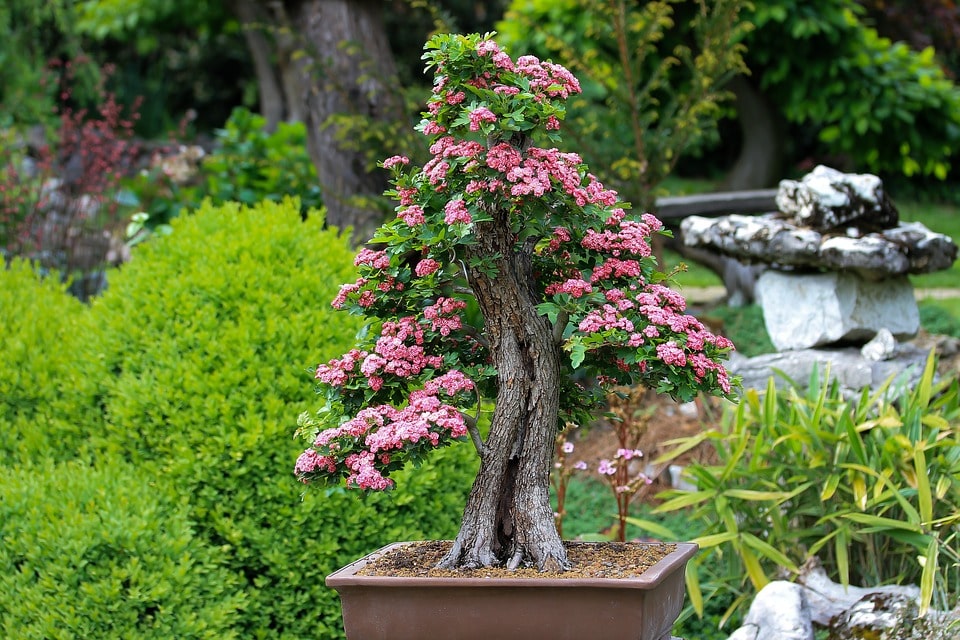
A bonsai is a tree or shrub grown in a container and shaped through techniques such as pruning, wiring, and root care. This guide introduces popular bonsai styles, suitable species, and essential care based on each tree’s needs.
Origin and history
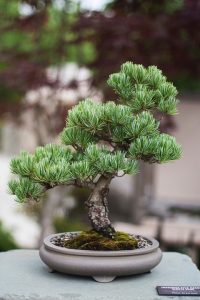
The Japanese word bonsai means a planting in a tray or container and is historically related to the Chinese term penzai.
Bonsai has historical roots in the Chinese art of penjing, which includes miniature trees and landscapes. Over time, Japan developed its own cultivation and design traditions that shaped bonsai as it is known today. Penjing can combine trees, rocks, and other elements to represent landscapes on a small scale. In different traditions, miniature trees have been associated with contemplation and the relationship between nature and art.
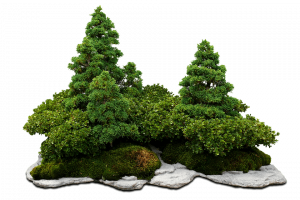
Japanese bonsai evolved from earlier traditions of cultivating miniature trees and developed its own styles over the centuries. Over time, Japanese practitioners refined the techniques and aesthetics associated with bonsai. Bonsai gradually developed into an art that combines horticulture, close observation of nature, and design.
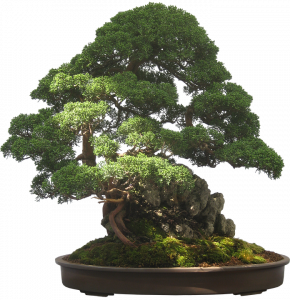
Over the years, the Chinese and Japanese who traveled to other countries were propagating the art of bonsai. However, these trees were officially shown to the Western public at the Universal Exposition in Philadelphia in 1876, in Paris in 1878 and 1889, at the Chicago Expo in 1893, at the St. Louis World Fair in 1904, at the Exhibition of Japan-Great Britain of 1910 and in the Exhibition of San Francisco of 1915.
After the Great Kantō earthquake of 1923, several bonsai growers moved to the Ōmiya area. In 1925, a community of bonsai nurseries was established there and became an important Japanese center for the art.
Today, bonsai is practiced in many countries. Techniques and styles vary, but the aim is to cultivate a healthy tree and express an artistic interpretation of nature through its form.
What Is a Bonsai Tree and How Is It Shaped?
Aldea Bonsái Omiya
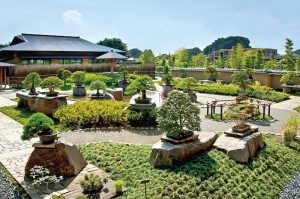
A bonsai is not genetically modified to remain small. Its size and shape are managed through species-appropriate pruning, root care and container cultivation.
Choosing a tree:
Many woody trees and shrubs can be trained as bonsai, but suitability depends on leaf size, growth habits, tolerance of pruning, and local climate. Choose a species that can thrive in your conditions rather than assuming every tree will adapt equally well to container culture.
These traits can complicate training, but they do not automatically rule out a species for bonsai:
- large leaves (such as those of the Horse Chestnut (Aesculus hippocastanum) or those of some Ficus such as (Ficus elastica)
- Excessively fast growth (like the one in the Albizia procera)
- life expectancy of two to four decades (such as Leucaena leucocephala)
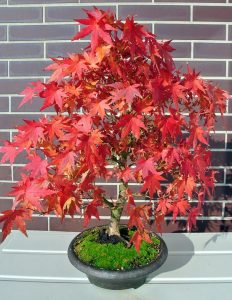
Common bonsai species include Japanese maple (Acer palmatum), elms (Ulmus), junipers (Juniperus), pines (Pinus), olive trees (Olea europaea), and ficus, which are especially useful in warm climates. The best choice depends on your climate and whether the tree will live indoors or outdoors; many temperate species need to remain outside.
Many shrubs make excellent bonsai because they respond well to pruning and may have naturally small leaves. Without forgetting that many of them have very ornamental leaves and / or flowers. Some of the most used are: Japanese quince (Chaenomeles japonica), Camellia, Berberis, Buxus, Forsythia, Coniferous and Pinus.
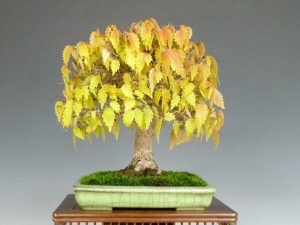
Choosing the Right Bonsai Soil:
Choose a growing medium suited to the species, climate and container. For faster drainage, use a coarser particle mix; adjust the mix to retain enough moisture for the species. The growing medium should drain well, and watering should depend on the species, climate, and season. Avoid letting the root ball dry out completely, but do not keep it waterlogged. For more detailed guidance, see the Royal Horticultural Society’s bonsai guide.
Fertilizer:
Fertilizer replenishes nutrients in the limited volume of a bonsai pot, but the formula and frequency depend on the species, growing medium, and growth stage. Follow the product instructions, and avoid fertilizing a sick or recently repotted tree—or a dormant tree—unless the product guidance recommends it.
Repotting:
There is no universal rule requiring a full year before repotting. Timing depends on the species, age, vigor, and climate; repot when needed and at the appropriate time for that tree. Early spring is common for many temperate species, but the right timing varies by species and climate. Root pruning and substrate replacement should be tailored to the species and the tree’s condition.
Pruning:
Pruning helps shape a bonsai, but timing and intensity depend on the species and the kind of cut. Not all bonsai should be pruned while leafless, and there is no universal 45-degree cutting rule. Use clean tools and avoid removing too much foliage at once.
Wiring:
Wiring guides branches into the desired position. Choose suitable wire and check it frequently so it does not bite into the bark as branches thicken. The right season and technique vary by species; wiring is not restricted to leafless trees.
Pinching:
Pinching controls shoot extension and encourages branching in species that tolerate it. Leaf size does not necessarily decrease with repeated pinching, and sun exposure must suit the particular species.
Create the bonsai
After selecting the tree and the design to be made, you must remove all the dead branches. Then choose the branches that you must eliminate according to the selected design.
For pruning you should take into account:
- Assess competing branches at the same level according to the design; keeping only one is not an absolute rule.
- Eliminate thick branches that grow vertical and are difficult to bend.
- Preserve natural curves that add movement, and remove only branches that compromise the design or the tree’s health.
Make clean cuts with disinfected tools. Wound sealant is not universally needed and does not guarantee faster healing; whether to use it depends on the species and the size of the wound.
Classification of bonsai according to size
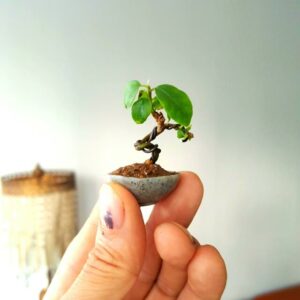
Shito or Keshitsubu:
They are the smallest bonsai, it is bonsai up to about 5 centimeters. In general, this bonsai was created by directly sowing a seed in a tiny pot, resulting in a bonsai that can be transported on the tip of a finger. They are very scarce and difficult to care for.
Mame:
Groups the trees with heights between 5 and 15 cm.
Komono o Kotate Mochi:
between 15 and 31 centimeters.
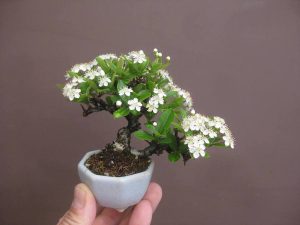
Shohin:
The Japanese term Shohin means “something small”, so in this classification we have the small bonsai. Shohin generally refers to bonsai up to about 20 cm tall, although limits vary among clubs and exhibitions.
Chumono:
The height of these bonsai is between 30 and 60 centimeters. They are easier to care for and due to the size of the pot they do not require watering so often.
Omono:
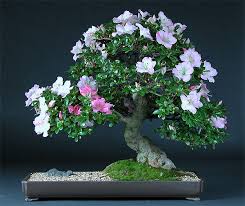
These bonsai measure between 60 and 120 centimeters, also considered as “large bonsai” and may need 2, 3 or more people for their transport in the case of the largest.
Hachi-uye:
They are the largest bonsai, called the “giant bonsai”. They are all trees that measure more than 130cm. They are really big, more like a tree modeled like bonsai. They are difficult to find due to their complex transfer and handling.
Types of bonsai according to their shape
Bonsai style broom (Hokidachi):
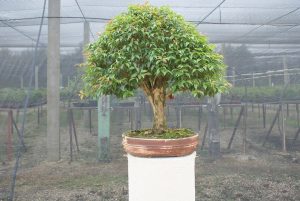
This broom style is preferably used for leafy deciduous trees with thin branches. The trunk is straight and does not reach the apex; the branch begins at a third of the height towards all the directions, forming a cup in the form of a ball.
Bonsai formal vertical style (Chokkan):
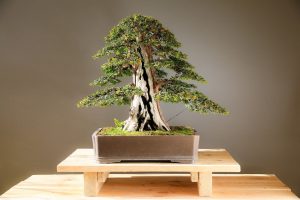
This style is very common, and is also often found in nature. The straight trunk should clearly show a conicity, as the lower part has to be thicker than the upper part. The first branches grow to a quarter of the height of the trunk. A branch forms the apex; therefore, the trunk is not the highest point of the tree.
Bonsai informal vertical style (Moyogi):
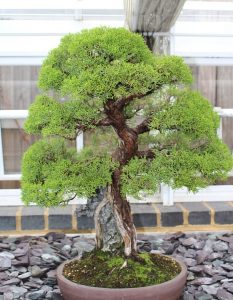
The informal vertical style is very common, both in Bonsai and in nature. The trunk snakes upwards and a branch grows from each curve. The trunk has to visibly show a conicity.
Bonsai inclined style (Shakan):
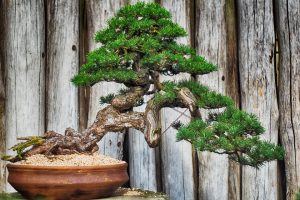
In the slanting style, the trunk leans away from vertical; the exact angle depends on the composition and is not a universal requirement. The roots on one side are well developed and thus keep the tree standing. On the side where the tree is tilted, the roots are clearly less developed.
The first branch grows in the opposite direction to the inclination of the tree to maintain balance. The trunk can be straight or a little inclined, but it has to show conicity, thick at the base and it should lose weight until it reaches the apex.
Cascade-style bonsai (Kengai):
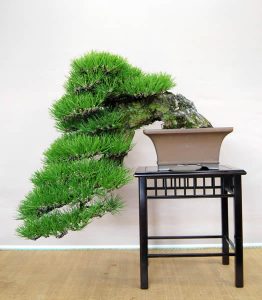
This Bonsai style is planted in tall pots. The trunk ascends a short distance and then bends over itself in the opposite direction. In a full cascade, the apex extends below the base of the pot, while the trunk and branches evoke a tree growing over a cliff. To maintain balance, these branches have to grow horizontally to balance the tree.
Semi-cascade bonsai (Han-kengai):
In a semi-cascade, the trunk extends below the pot rim, but the apex generally does not drop below the base. This distinguishes it from a full cascade.
Bonsai literati style (Bunjin):
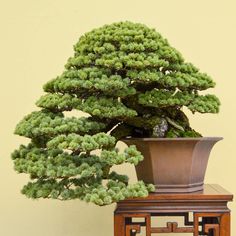
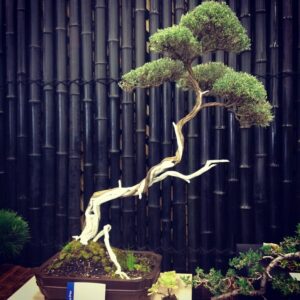
In nature this type of tree is found in places where the competition of other plants is so great that the only way to survive is to grow above all. To make the Bonsai Literati look even more resistant, the bark is removed from some dry branches (what is called Jin) or from a part of the trunk (what is called Shari). They are often displayed in understated containers that complement their sparse silhouette.
Windswept bonsai (Fukinagashi):
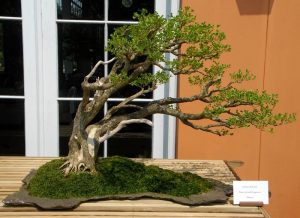
The Fukinagashi style is also a good example of trees that have to fight to survive. All the branches and the trunk grow in one direction, as if the wind blows and lashes the tree constantly to the side. The branches alternate to the left and to the right of the trunk, but in the end they all lean in one direction.
Double-trunk bonsai(Sokan):
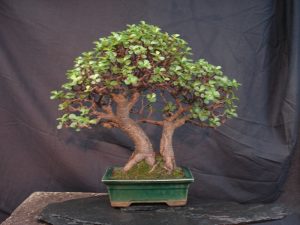
The double trunk is a very common form in nature, but in Bonsais you do not see much. Normally two trunks of a single root system grow, but it is also possible that a smaller trunk emerges from the main trunk very close to the ground. The trunks differ greatly in thickness and altitude: the thickest and most developed trunk grows in an almost vertical direction, but the thinner trunk leans slightly outwards. The two trunks form a single tree crown.
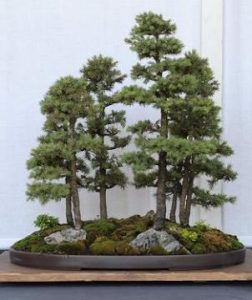
Bonsai forest (Yose-ue):
The Yose-Ue style is much like the style of multiple trunks, but with one important difference: the forest consists of loose trees that form a group. The tallest trees are often placed near the center of the container, which is usually large and flat. The smaller trees are planted more to the sides so that a unified canopy forms.
You should avoid planting trees in a straight line, so the forest looks much more natural.
Bonsai style multiple trunks (Kabudachi):
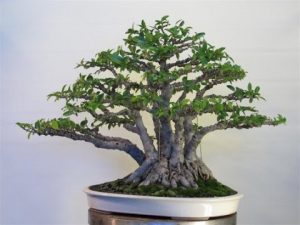
The Kabudachi style is actually the same as the double trunk style, but with 3 trunks or more. The trunks all grow from a single root system, so it is a single tree. The trunks have a shared canopy with a single apex that will be formed by the thickest and most developed trunk.
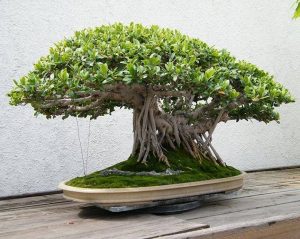
Root-over-rock bonsai(Seki-joju):
In a rocky soil the roots of the trees are forced to look for the fertile earth that is in the holes and fissures. The roots are bare on the rocks, so they are covered with a bark similar to the trunk to protect them from the sun. As the roots that grow on the stone then sink into the soil of the pot, the care of this type of tree does not differ from that of other styles. Maple trees are often used for this style.
Bonsai style rooted in rock (Ishizuki):
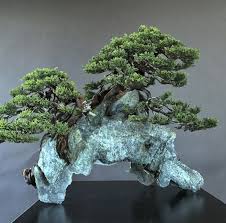
In this style the trees grow inside the holes or fissures of a rock, which means that there is only a very small space where they can develop and absorb nutrients. This style evokes a tree surviving in a rocky crevice; despite its rugged appearance, the tree itself must remain healthy.
Obviously you have to water and fertilize regularly since the storage capacity of water and nutrients in the soil and within the rock is very small. The rock is usually set in a suitable shallow container with well-drained substrate; standing water is not universally appropriate.
Raft-style bonsai (Ikadabuki):
Sometimes an old downed tree can survive by growing its upturned branches. For this to happen, the roots of the old tree must provide sufficient nutrients to these branches to carry out this effort. After a while, new roots grow from the lower part of the fallen trunk, assuming at the end the function of the original roots. The upright branches gradually thicken into separate-looking trunks as the fallen stem develops new roots. The new trunks end up forming a single canopy, just like in the Yose-ue style. However, in the raft style, the new trunks remain visibly connected to the original fallen trunk.
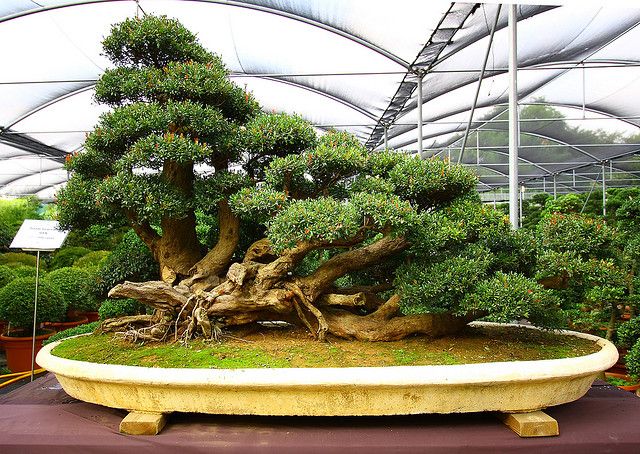
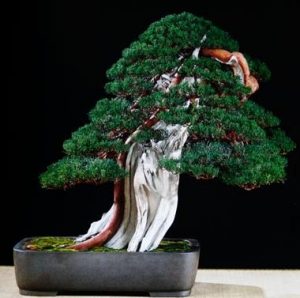
Deadwood bonsai (Sharimiki):
Over time, in some trees areas of the trunk without bark arise due to inclement weather. These areas usually begin in the lower part of the trunk, close to the roots and ascend through it becoming increasingly thin. The intense sunlight comes to whiten those bare parts and give them a very characteristic aspect of this style. In bonsai, deadwood should be worked only on already dead tissue or by trained practitioners; removing living bark can kill part of a tree. Lime sulfur requires appropriate protective handling. This technique is called doing shari.
Basic bonsai care
Before choosing a bonsai, get to know the species and the place where it will live. Not every tree has the same needs: many temperate species belong outdoors, where they can experience the seasons, while some tropical trees can adapt to a bright indoor spot. Watering is not a matter of following a rigid calendar. Check the soil, water thoroughly when needed, and allow excess water to drain away.
Light, fresh air, and well-draining soil matter just as much as pruning. If you are new to bonsai, take time to watch how your tree grows before trying wiring or repotting. For more practical advice, visit the Royal Horticultural Society’s bonsai guide.
Meaning and Symbolism of Bonsai
When we give a bonsai, we are wishing the person who receives it to achieve independence, majesty of spirit, good health, wisdom or dignity in old age. That is, we give him a desire for happiness, friendship, a long life and a quiet old age.
Then I leave some TOP bonsai.
Top of the 10 best bonsai: https://www.bonsaiempire.es/inspiracion/top-10/mejores-bonsais
Top of the 10 best bonsai in bloom: https://www.bonsaiempire.es/inspiracion/top-10/bonsais-de-flor
If you liked our article, like it and share it on social networks, your friends also want to know more about these tiny trees. Leave us your comments here.

Source of information:
https://www.bonsaiempire.es/
Related article: The ferns, characteristics and how to grow them
Share this content: