The baobab flower: a centennial and majestic tree
Hello, friends. Today we explore the remarkable flowers of the baobab, one of Africa’s most iconic trees.
Baobab flower

The scientific name of this plant of African origin is Adansonia digitata, commonly known as the African baobab or monkey-bread tree. Some specimens grow exceptionally large trunks, although height and girth vary widely with age and growing conditions.
Baobabs can live for centuries. Estimating the exact age of very old trees is difficult, and trunk girth alone is not a reliable measure.
The genus Adansonia includes several species distributed across Africa, Madagascar and Australia; its taxonomy has been revised over time. Baobabs are emblematic trees of Madagascar, where several endemic species grow.
In South Africa, the Order of the Baobab is a national honour recognising outstanding contributions to society; its name reflects the tree’s cultural significance.
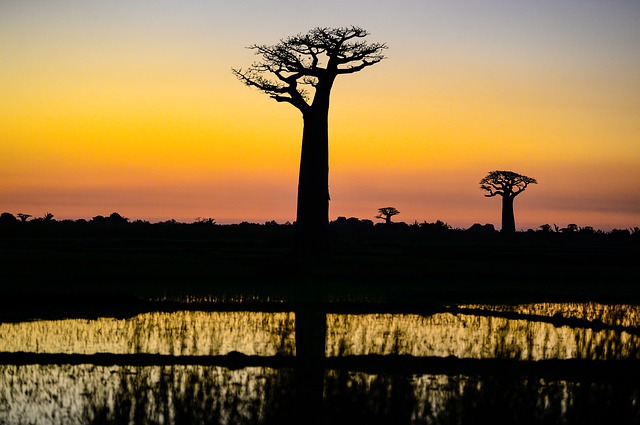
Baobabs are deciduous trees that shed their leaves during the dry season, although the duration varies with local climate. Their trunks store substantial amounts of water, helping them survive drought; storage capacity depends on the size and condition of each tree. These water-storage adaptations resemble those of other succulent plants.
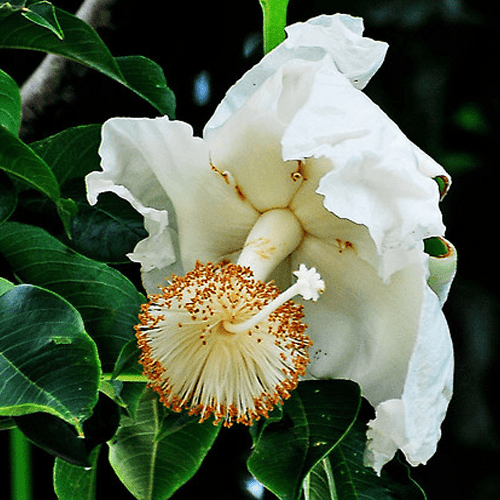
A very peculiar feature of this tree is the flowers. Its first flowering occurs once the tree reaches maturity, and the age varies with growing conditions. Its flowers open at dusk and release a distinctive scent. Pollinators vary by region and can include bats and hawkmoths. Flowers usually fall within about 24 hours of opening, although their main reproductive activity occurs at night.
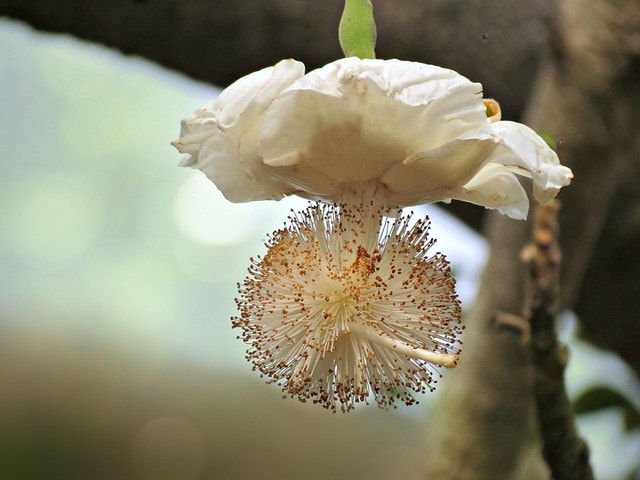
African baobab flowers are large, pale and bisexual. After successful pollination, a hard-shelled fruit develops containing dry pulp and seeds; it is not a type of melon.
Baobab tree use
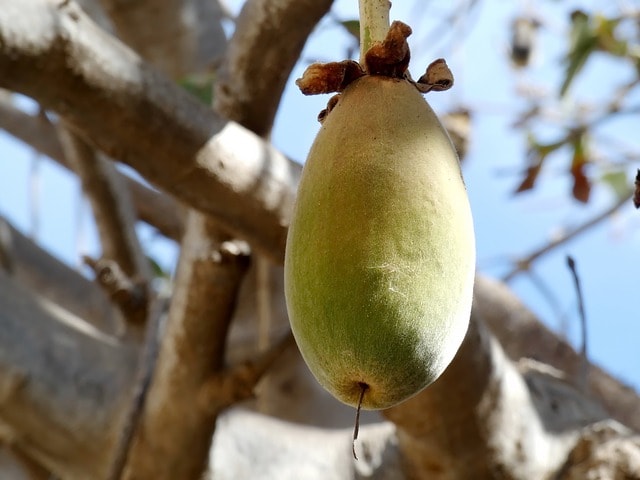
Baobabs have many traditional food and craft uses. Their leaves are cooked in parts of Africa, the fruit’s dry pulp is added to drinks and foods, and bark fibres can be made into rope. Seeds are also used, including to extract oil for culinary or cosmetic purposes. Traditional infusions and topical preparations have cultural significance, but they are not proof of medical effectiveness and should not replace appropriate care.
If you want to see more images of this great tree, click here.
The baobab is an extraordinary tree, isn’t it? Leave us your comments and share on your social networks if you liked the article. Until next time.
A flower that opens at night
Hello friends, one of the African baobab’s most fascinating features is that its large flowers generally open around dusk or during the night. Their scent and nectar help attract pollinators, which may include bats and other animals depending on the region. Baobabs also matter to local communities that use their fruit and other parts of the tree, although traditions vary from place to place. You can check the accepted botanical name of Adansonia digitata through Plants of the World Online (Kew).
Share this content: