The butterfly, National Flower of Cuba
The Mariposa: Cuba’s National Flower
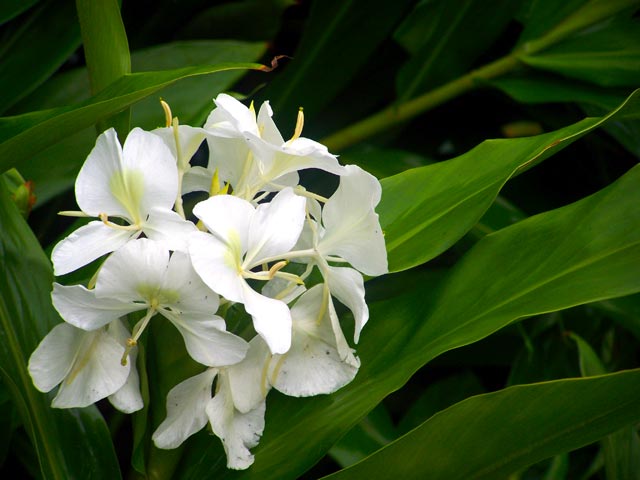
When we think of a country’s symbols, the flag, anthem and coat of arms usually come to mind. Yet many countries also have a national flower. Today I’m starting a series about these floral emblems. As a Cuban, I could hardly begin with anything other than our beloved mariposa blanca, also known in English as the white ginger lily.
Its scientific name is Hedychium coronarium. A rhizomatous perennial in the ginger family (Zingiberaceae), it produces striking, intensely fragrant white flowers. The name Hedychium evokes their sweet scent and snowy appearance.
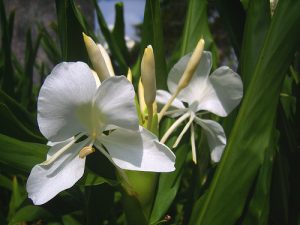
Although it is Cuba’s national flower, the mariposa is not native to the island. Its natural range lies in parts of South and Southeast Asia. It has been introduced elsewhere, including Brazil and Hawaii, where it can become naturalized and sometimes invasive.
The plant has grown in Cuban gardens and courtyards since the nineteenth century. It also thrives in moist places near streams and rivers. Its fragrance made it a favorite for personal adornment and flower arrangements.
How the Mariposa Became the National Flower
In 1936, Cuba received an invitation from the Garden of Peace in La Plata, Argentina, to contribute a national flower. Since no flower had yet been selected, a Cuban commission of botanists and other specialists was appointed to consider the candidates.
Accounts of the selection describe several flowers under consideration, including water hyacinth, night-blooming jasmine (galán de noche), lirio de San Juan and the white mariposa. According to those accounts, the mariposa received 52 points, followed by galán de noche with 49, water hyacinth with 39, lirio de San Juan with 35, aguinaldo with 32 and garbancillo with 24. These historical common names do not always identify a single botanical species.
The mariposa’s popularity and the whiteness of its flowers, associated with peace and the ideals of Cuban independence, helped make it the preferred choice. Cuban historical tradition also tells of patriotic women concealing messages among mariposa bouquets during the wars of independence and wearing the blossoms as signs of resistance to Spanish colonial rule. These stories belong to the flower’s cultural heritage.
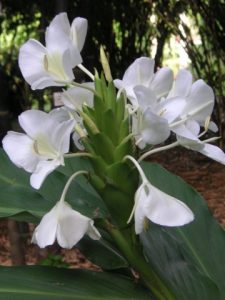
The mariposa was selected as Cuba’s national flower on October 13, 1936. It was subsequently represented at the Garden of Peace in La Plata, Argentina, alongside the national flowers of other countries.
In Hawaii, traditional uses of preparations from this plant for hair and skin care have been reported. Such practices are part of local knowledge, but they should not be mistaken for clinically proven treatments; the safety of homemade preparations is not assured.
Growing White Ginger Lily
• Choose a bright location with gentle sun or partial shade, depending on your climate.
• Grow it in organic-rich soil that stays moist but drains well. Use a roomy container with drainage holes if planting in a pot.
• Propagate it by dividing the rhizomes as new growth begins. Seeds are possible, but division is usually simpler.
• Keep its spreading rhizomes under control. In places where the species is invasive, never discard rhizomes in natural areas.
In warm, rainy conditions, the plant may reach around six feet (1.8 m) tall. Its fragrant blooms are a familiar part of many Cuban gardens.
The mariposa is cherished in bridal bouquets, on religious altars and in floral offerings for loved ones who have died. I love having its scent nearby: for me, it is one of those flowers that always stays close to the heart.
If you enjoyed this article, please share it and tell us about your own memories of the mariposa in the comments.

Related article: Dahlia, National Flower of Mexico
Share this content: