Crown of Christ: an exotic flower. Origin, characteristics and care
Hello, flower and plant lovers! Today I want to share what I have learned about a striking, thorny succulent: the crown of thorns. It is commonly called the Crown of Christ.
Crown of thorns
Origin
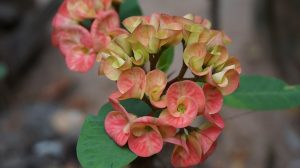
The crown of thorns is native to Madagascar and is now grown in many tropical and subtropical regions. Its scientific name is Euphorbia milii, with the genus name traditionally linked to Euphorbus, a physician to Juba II. The epithet milii honours Milius, who is associated with the plant’s introduction into cultivation; precise historical titles should not be asserted without reliable documentation.
Another common name is crown of thorns. The name evokes the crown of thorns in Christian tradition, but there is no historical evidence that this Madagascan species was used in that event.
Characteristics
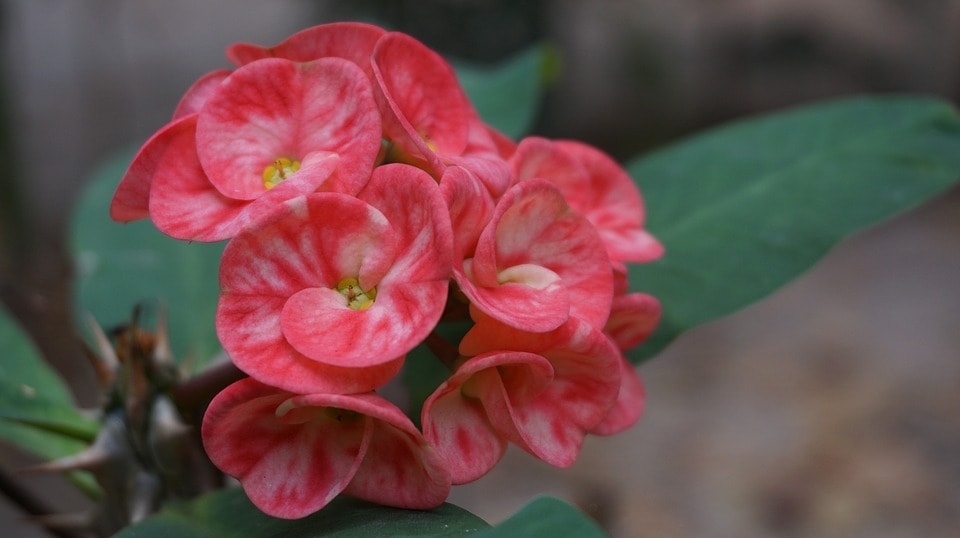
This succulent has woody, spiny stems and may develop into a substantial shrub in suitable conditions. Its true flowers are tiny; the showy red, pink, yellow or white parts around them are coloured bracts. It is sensitive to frost. Its milky latex can irritate skin and cause serious eye injury. Wear gloves and eye protection when pruning or taking cuttings, avoid touching your face, and keep the plant out of reach of children and pets.

In warm climates, the crown of thorns may bloom through much of the year; elsewhere it flowers mainly during brighter months. It usually blooms best in strong light with some direct sun, but plants raised in shade should be acclimatised gradually to prevent leaf scorch.
Grow it in a porous, free-draining succulent mix. It can live in a container with drainage holes or in a garden bed where water does not collect around the roots.
Reproduction and care
Euphorbia milii can be propagated from stem cuttings during warm weather. Wear gloves and eye protection, allow the latex to stop flowing and let the cut surface dry before rooting in a free-draining medium. Water only when the top layer of mix has dried, adjusting to season, temperature and container size. Feed sparingly with a suitable succulent fertiliser if the plant needs nutrients.
With its colourful bracts and thorny branches, this plant can brighten a sunny terrace or garden. Indoors it needs very bright light, and it should always be placed where people and pets cannot brush against its spines or latex. Would you like to grow one?
If you enjoyed this article, share it and tell us about your experience in the comments.

Why is my crown of thorns losing leaves?
If your crown of thorns starts dropping leaves, it does not necessarily mean the plant is diseased. Sudden temperature changes, poor light or overly wet soil can all play a part. Before watering again, check the potting mix and make sure the container drains properly. The plant usually needs less water during cooler periods.
Take care when handling it: the milky sap of Euphorbia milii can irritate skin and eyes, and the plant should not be eaten. The Royal Horticultural Society provides growing advice and safety information. If you enjoy succulents, explore our guide to cacti and other succulents.
Related article: The petunia black cat : a beautiful variety of this beautiful flower
Share this content: