Dutchman’s Pipe: Characteristics, Care and Propagation
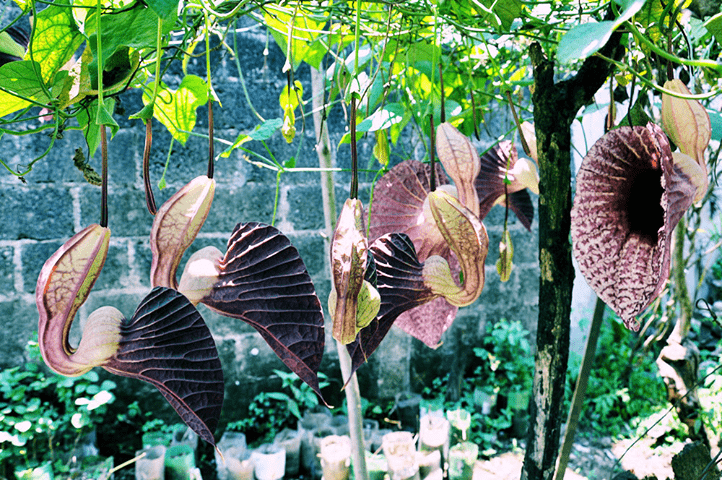
Hello friends, today I am accommodating requests. Some time ago one of the followers of our Facebook page asked us for information about this beautiful plant, showing some images and one of the names by which it is known: duck flower or Dutchman’s pipe.
Before buying seeds, check local rules: this vine can be invasive and may harm native butterflies in some regions.
Safety note: Aristolochia species may contain aristolochic acids, which are associated with serious kidney damage and cancer risk when ingested. Grow this plant for ornamental purposes only; do not consume it or use it as a home remedy.
Characteristics
The scientific name of the Dutchman’s Pipe species is Aristolochia littoralis, in addition to these names, it is also known as calico flower or elegant Dutchman’s pipe. According to Plants of the World Online, this species is native to an area extending from Colombia to northern Argentina. The genus Aristolochia includes numerous species found across tropical and temperate regions.
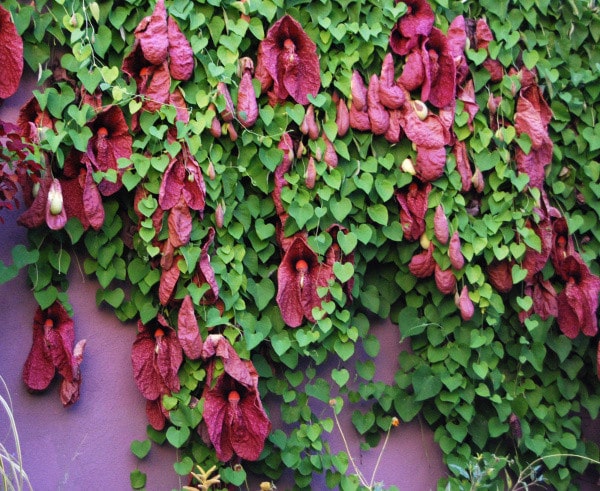
Aristolochia littoralis is a climbing vine that can reach several meters when given support. It is evergreen in warm climates but may lose foliage under cold or water stress. Grow it in fertile, moist but well-drained soil, with bright light and some protection from intense midday sun where needed. Pruning can control its spread, and it can be propagated from seed or cuttings. Check local restrictions and invasive-species guidance before planting, and prevent its escape into natural habitats. In parts of Australia, its leaves can be fatal to native birdwing butterfly caterpillars that mistake it for their host plant.
Pollination
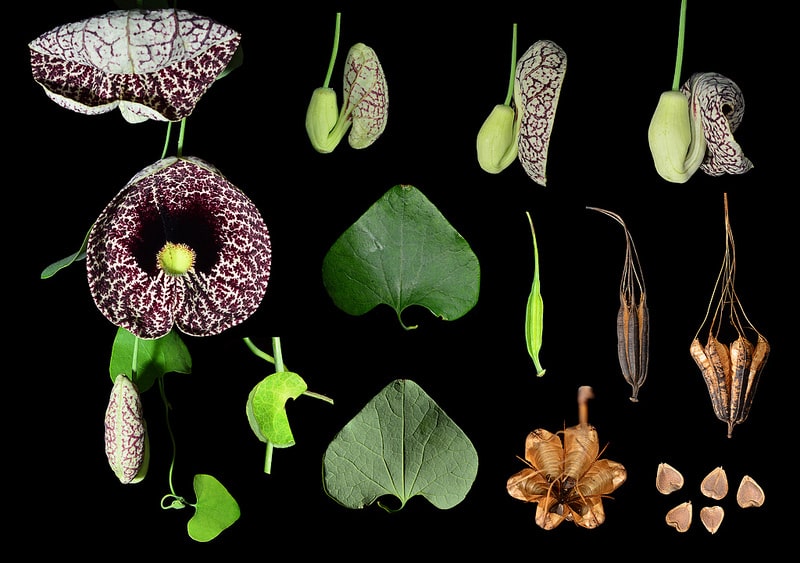
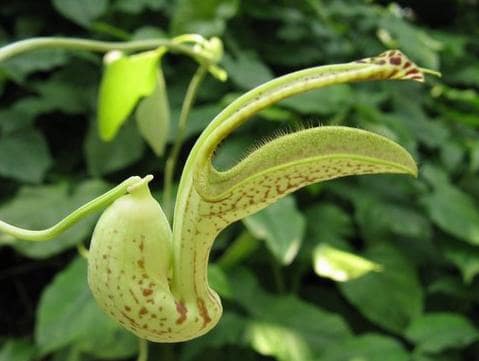
Some Aristolochia flowers attract small insects through scent and visual cues. Their tubular floral structures can temporarily trap visitors and release them as the flower changes phase, helping transfer pollen. The showy part is largely a modified perianth or calyx, rather than a conventional corolla.
The main species of Aristolochia or Dutchman’s Pipe
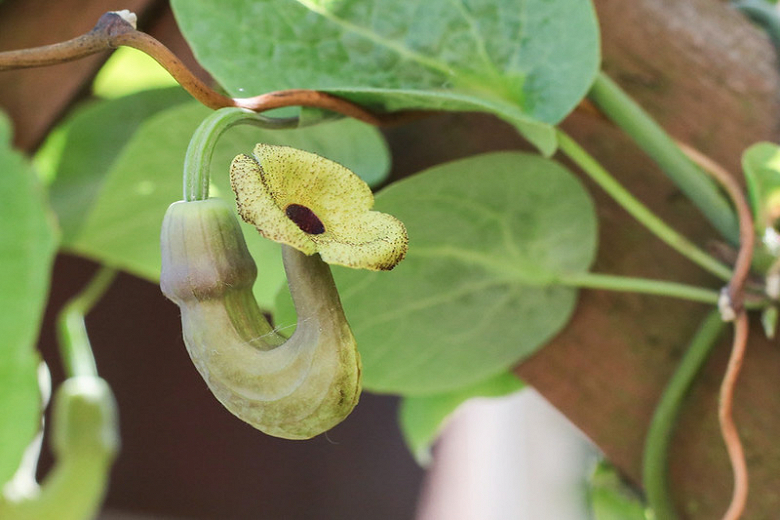
Aristolochia macrophylla
Aristolochia macrophylla is a climbing vine native to eastern North America, prized for its large, heart-shaped leaves, which can approach 30 cm across. Its relatively inconspicuous pipe-shaped flowers are greenish to brownish and often hidden beneath the foliage.
Aristolochia clematitis
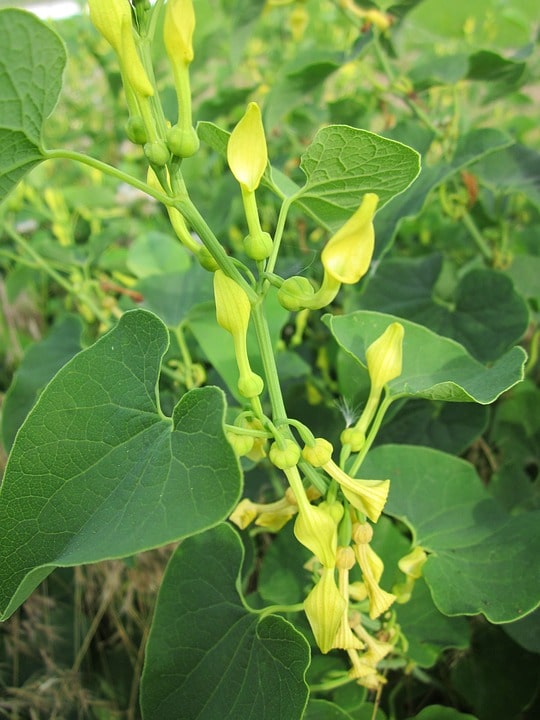
Aristolochia clematitis is native to regions of the Mediterranean, Asia Minor and the Caucasus. It reaches a height of approximately one meter and is characterized by having an erect stem on which the petiolate leaves develop. The flowers, typical of the genus, are pipe-shaped, yellow in color and generally develop in the axils of the leaves in groups of two or more. The fruit is a pendulous globose capsule of about 3 cm in diameter.
Aristolochia gigantea
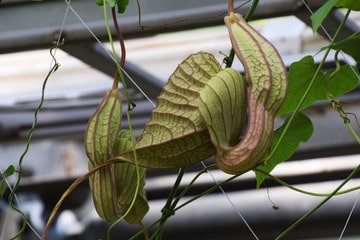
Aristolochia gigantea is native to eastern and southern Brazil, not Colombia or Panama according to Kew’s Plants of the World Online. This vigorous vine can develop woody stems and exceptionally large, patterned flowers with an expanded perianth. Some people find their scent unpleasant; flower size and plant vigor depend on growing conditions.
Aristolochia elegans
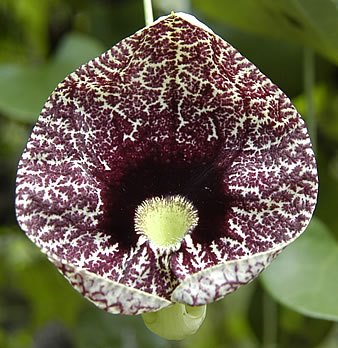
Aristolochia elegans is treated as a synonym of Aristolochia littoralis in current botanical references. This climbing species bears heart-shaped leaves and striking, patterned, pipe-shaped flowers. Its flowering period depends on the local climate rather than being restricted to July through September.
Aristolochia fangchi
Aristolochia fangchi is a climbing species native to southern China and northern Vietnam. It is particularly associated with the dangers of aristolochic acids and must not be ingested or used in homemade medicinal preparations. Its flowering period depends on local conditions.
These are only a few examples from the genus Aristolochia. Species differ in their native ranges, climate requirements and growth habits; none should be treated as safe for consumption or homemade medicinal use.
To learn more about indoor plants, you can visit our article Indoor plants: the best options to decorate your home
I hope you liked the article. If so, evaluate it, give it a like and share it on your social networks so that your friends can also learn more about these beautiful flowers.
Botanical and safety references
- Plants of the World Online (Kew): Aristolochia littoralis
- European Medicines Agency: risks associated with Aristolochia species
Share this content: